What Sport Looks Like When Few People Are Watching
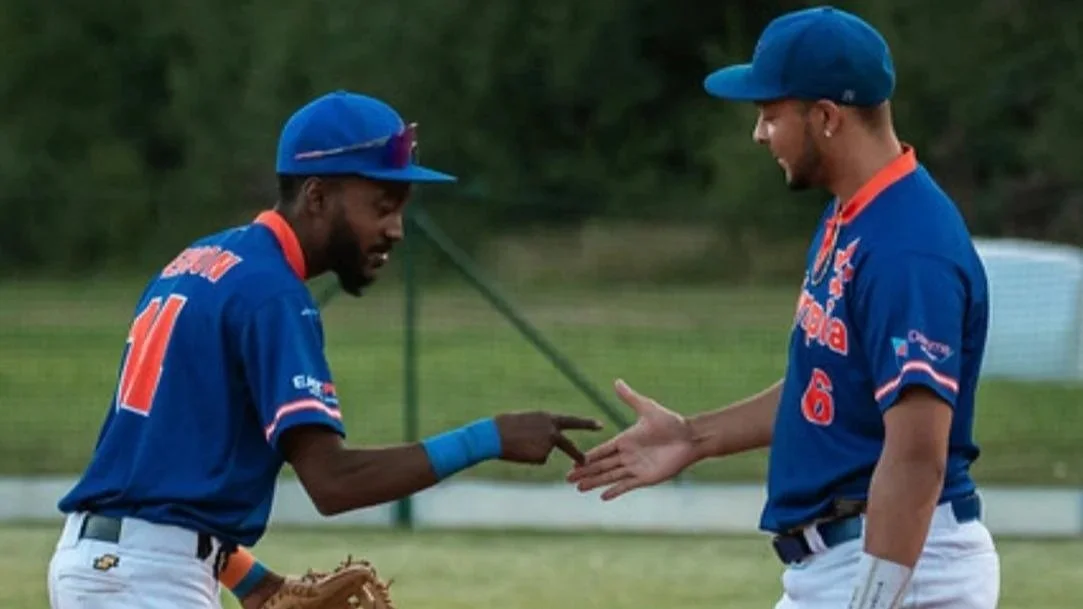
Last week I was in Czech Republic for the Men's Softball European Super Cup 2026. Narrative Athletics sponsored my cousin Quincy, who plays for Olympia Haarlem. I made the trip to watch.
I want to say upfront that this piece is not about softball. It is about what becomes visible when you spend a week inside a sporting environment that most people never see, and what that visibility reveals about identity, ambition, and the specific weight that athletes carry into competition that has nothing to do with the sport itself.
The Space Between
The Men's Softball European Super Cup sits at a semi-professional level that makes it more psychologically complex than either a purely amateur or fully professional competition. The athletes competing here are genuinely good, good enough to represent their countries and clubs at a European championship, committed enough to take time away from work and family to be there. Some teams reinforce their rosters specifically for this event, flying in players from outside Europe to raise the competitive level. The ambition in the room is real.
What is also real is that almost none of the external infrastructure that professional sport uses to validate that ambition exists here. There is no significant prize money. No broadcast audience counting in the millions. No commercial apparatus telling these athletes that what they are sacrificing is proportionate to what they will receive in return. The validation is almost entirely internal, which means the motivation has to be too.
Internal motivation, when you observe it closely over a week of competition, looks different from external motivation. It is quieter, it does not perform primarily for an audience because there is no big audience to perform for. It shows up in smaller and more honest ways, in how an athlete responds to a mistake when nobody particularly noticed, in how they carry themselves between games when the competition is not providing structure, in the specific quality of focus that comes from choosing to be somewhere purely because you believe in what you are doing there.
That is what a semi-professional European championship offers that a fully professional environment rarely does. A clearer view of why the athlete is actually there.
What You See When the Spotlight Is Off
Watching sport at this level as someone who thinks about athletic identity for a living produces observations that a box score cannot contain.
The full weight of an athlete's life is present at a competition like this in a way that professional sport, with its insulating structures of contracts and support staff and financial security, tends to separate from performance. The cost of being away is not abstract here, it is visible. In how athletes move in the hours between games. In the quieter moments in dugouts when the game is not providing direction. In the specific tiredness that comes not just from competition but from carrying everything that brought you to this point and everything waiting for you when you return.
These athletes chose to be here. That choice is not small. It involves real financial cost, real time away from people and responsibilities that matter, real pressure to perform for teammates who made the same sacrifice for the same reasons. None of that disappears when the game starts. It comes with them onto the field, shapes how they respond to pressure, and determines, more than pure athletic ability often does, what they are able to produce in the moments that matter most.
What I observed across a week of games was not athletes escaping their lives for sport. It was athletes bringing their lives into sport and competing anyway, which is a different and more honest thing.
Quincy had a tournament that built slowly. Quiet early games, moments where things did not click, followed by a second half of the competition where something settled and the athlete I know became clearly visible. Key defensive plays and two home runs in the later rounds, a version of himself that emerged through the accumulation of the week rather than arriving fully formed at the start of it. It was not enough to advance to the final day, but watching it happen told me something about what competitive sport looks like when you strip away the infrastructure that usually surrounds it. The result is not always the most interesting part.
Presence as a Form of Support
The moment I will carry from this trip was before the games even started. It was Sunday evening, the first night in České Budějovice. I met up with Quincy and we played dominos with his teammates. When I greeted him, I saw something in his face that I recognized immediately. Appreciation, quiet and genuine, for the simple fact that someone had made the trip.
That moment made me think about my father, who was at every basketball game I ever played as a kid and called it his favorite part of the week. I thought about it then and I have thought about it since, because it contains something true about what athletes actually need from the people around them that is easy to miss if you are focused on the wrong things.
The knowledge that someone chose to be there when they did not have to be, that the thing you are doing matters enough to someone else that they made the trip to be part of it, even as a witness rather than a participant. That is presence in its purest form, and it’s more important to a person than some may understand.
What stays with an athlete across a career is not always the coaching, the training or the results. It is who showed up, who was in the stands on a Tuesday evening at a local ground and stayed when the score was not going the right way. That knowledge accumulates, it becomes part of how an athlete understands what their sport means and who they are within it. Part of the identity they build across years of competing in spaces that most people will never see.
Identity Built Without an Audience
The athletes at the Men's Softball European Super Cup have built identities as competitors across years of choosing a sport that will not make them famous, will not make them rich, and will not be understood by most of the people in their lives as anything other than a hobby taken slightly too seriously.
That identity is as genuine as any built under stadium lights. In some ways it is more clearly chosen, because it exists without the external reinforcement that makes professional sport identity partly constructed by forces outside the athlete. The financial incentives, the cultural visibility, the commercial apparatus that tells a professional athlete that what they do matters, none of that is present here. What is present is the choice, made repeatedly across years, to keep showing up for something that gives back primarily in the currency of the sport itself.
These athletes know exactly why they play. The clarity of that knowing is visible precisely because the external noise that usually obscures it is absent. It is the kind of clarity that professional sport, with all its resources and all its attention, often struggles to produce. When you remove the audience, the money, and the media, what remains is the purest version of athletic identity available. The version that was there before any of those things arrived and will be there after they are gone.
Narrative Athletics exists to help athletes understand what they represent and build something lasting around it. The sponsorship that brought me to Czech Republic was small in financial terms and significant in what it represented, a commitment to showing up for an athlete doing something real in a space that most people overlook.
What I came back with is a clearer sense of something I already believed but needed to see again from the outside. Identity in sport is not built by the spotlight. It is built in its absence, across years of competition that nobody particularly notices, by athletes who keep choosing the sport anyway because the sport keeps giving them a reason to.
The people who show up for those athletes, who make the trip, who sit in the stands when they do not have to, are part of that identity whether they know it or not. I’ve known that by being a semi-professional athlete myself, and I remember now more clearly than I did before I got on the plane.