The Philosophy Coming Home
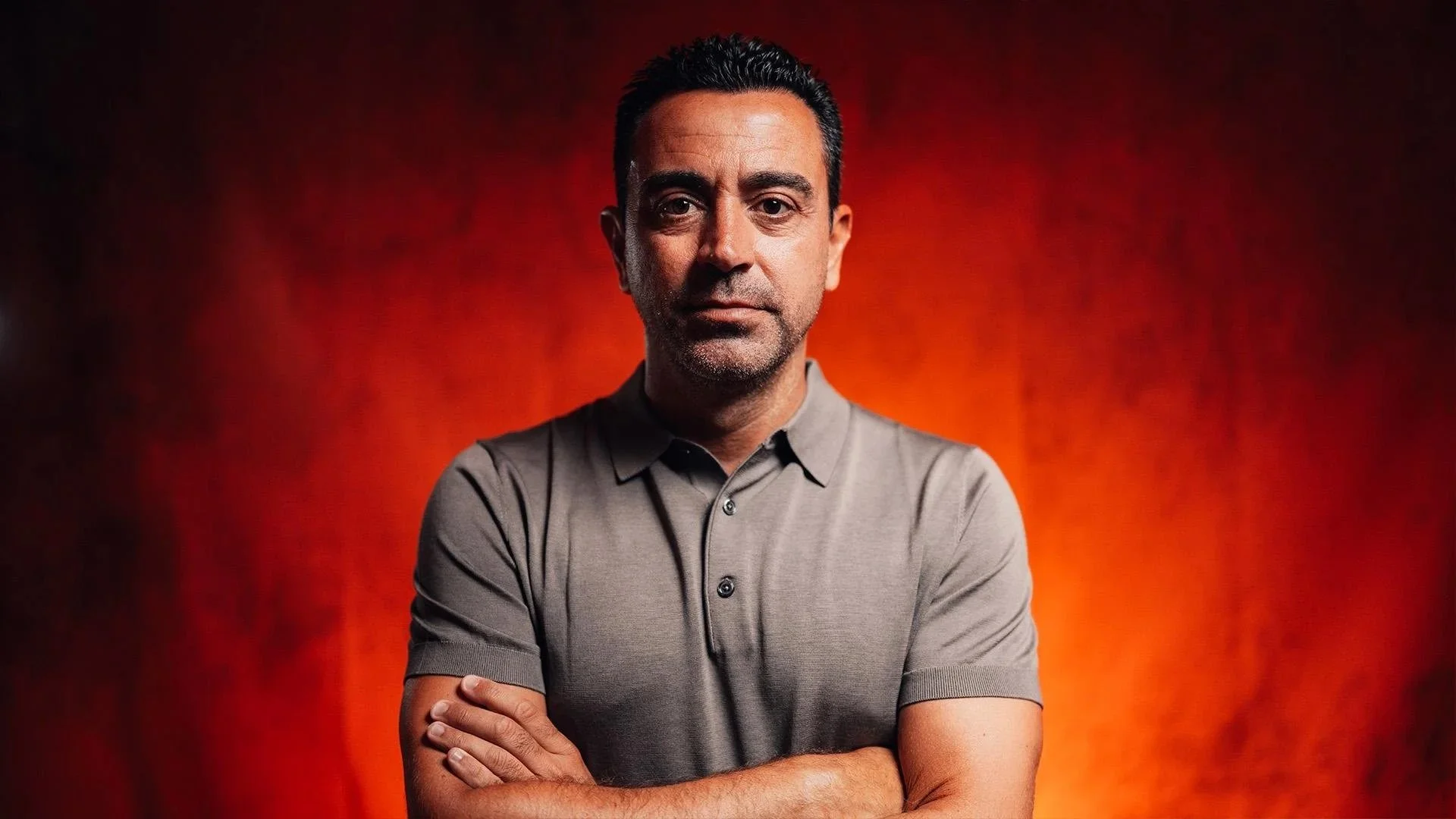
On August 12, the KNVB confirmed Xavi Hernández as the new head coach of the Netherlands men's national team on a contract running through the 2030 FIFA World Cup. He succeeds Ronald Koeman, who resigned on June 30 after the Netherlands were eliminated in the round of 32 at the 2026 World Cup by Morocco, a defeat described by the federation as a low point in style as much as result.
Xavi was the third choice for the job. Pep Guardiola was approached and declined. Arne Slot, who had recently left Liverpool, was approached and declined. Xavi accepted, and when asked about being third on the list, he answered with the kind of composure that suggests someone who knows exactly who they are. "Well, it's not a bad position after Guardiola and after Slot. Third position. At least we are on the podium. I don't care."
That answer is more revealing than it appears. Xavi does not need external validation of his value because he has a clear enough sense of what he represents and what he is being asked to do. He is not taking this job to prove something. He is taking it because the job and the philosophy it requires are, in the most literal sense possible, the ones he was built for.
The circle this appointment closes is exact, and understanding it is the most useful way to understand why the KNVB's third choice might be its most coherent one.
What Xavi Did at Barcelona
When Xavi Hernández took over as Barcelona head coach in November 2021, the club was ninth in La Liga, had just been eliminated from the Champions League group stage in consecutive seasons, and was navigating one of the most turbulent periods in its modern history. Lionel Messi had left. The finances were in crisis. Ronald Koeman had been sacked. The connection between what Barcelona was supposed to be and what it had become on the pitch had been severing, slowly and then suddenly, for years.
Xavi did not arrive with a new idea. He arrived with a reminder.
Barcelona's identity, the one that produced the most celebrated club football of the modern era under Pep Guardiola between 2008 and 2012, is built on specific and non-negotiable principles. Possession as control. Pressing as a collective act. Positional play that suffocates opponents through movement and precision rather than through physical dominance. La Masia as the source of players who understand these principles from childhood, who feel them rather than executing them as instructions. The identity was not a tactic. It was a culture, a way of understanding what the game is for and how it should be played.
That culture had been covered over by years of financial pressure, pragmatic concessions to short-term results, and the gradual erosion that happens to any organizational identity when the people making decisions stop filtering every choice through a clear sense of what the organization is. The identity was not gone. It was obscured.
Xavi's task was not to invent something new. It was to clear what had accumulated on top of something that had always been there, reinstating the principles, demanding the culture, and rebuilding the connection between how Barcelona plays and what Barcelona actually is. Players noticed the shift immediately. Ansu Fati described it as a "different mindset," a change not in tactics first but in understanding, in what the players were asked to believe about their own game before they were asked to execute anything specific.
Barcelona won the Copa del Rey and La Liga under Xavi. They were ultimately sacked after a trophyless final season, the result of a turbulent relationship with the club's president that reflected the difficulty of identity restoration in a financially constrained environment with institutional instability around the coaching position. But the footballing clarity of what he built, the visible return to something recognizable as Barça, was real and it was his.
He left Barcelona in May 2024 with his coaching philosophy intact and his understanding of identity-based football deeper than when he arrived.
The Netherlands' Drift From Itself
The story of Dutch football's identity is one of the most instructive in the history of the sport, and its arc over the last four decades is the context that makes Xavi's appointment most meaningful.
Total football, the philosophy associated most closely with Johan Cruyff and the Dutch teams of the 1970s, is not primarily a tactical system. It is a philosophical position about what football should be. Intelligent, fluid, dominant, built on the technical excellence of every outfield player, on the ability to press and move and create space as a collective, on the belief that the team that controls the game controls the outcome. The 1974 World Cup finalists, perhaps the most admired team never to win the tournament, and the 1978 finalists that followed, embodied that philosophy at its purest expression.
The 1988 European Championship, won by a Dutch team containing Ruud Gullit, Marco van Basten, and Frank Rijkaard, was the philosophy's greatest result. Since then, the Netherlands have produced extraordinary individual players, Dennis Bergkamp, Patrick Kluivert, Clarence Seedorf, Arjen Robben, Virgil van Dijk, Frenkie de Jong, in almost every generation. What they have not consistently produced is a national team that plays the football those players' abilities demand.
The drift happened gradually and with understandable causes. Tournament football rewards pragmatism. Opponents become more organized. The physical demands of the modern game create pressure toward defensive solidity that pulls against the attacking ambition the Dutch identity requires. Ronald Koeman, a deeply experienced coach who had produced excellent results with club teams, managed the Netherlands through a period of reasonable tournament performances without ever quite recapturing the philosophical clarity that distinguishes Dutch football at its best from Dutch football that is merely competent.
The Morocco defeat at the 2026 World Cup was the moment the drift became impossible to ignore. Not primarily because of the result, though losing in the round of 32 is a significant underachievement for a squad of that quality. Because of how the team played. The KNVB described it as a stylistic low point as much as a competitive one. The federation's director Nigel de Jong said explicitly that Xavi had been appointed with a clear brief to restore attacking, possession-based football, taking the initiative, playing dominant and attractive football, combined with the flexibility required in modern football at the highest level.
That sentence is an identity statement. The KNVB knows what the Netherlands is supposed to be. The question was who could restore it.
Why the Third Choice Is the Right Answer
The conventional reading of Xavi being third on the KNVB's shortlist is that the federation settled. The more instructive reading is that what looked like settling was actually the most coherent appointment available, once you understand what the job actually requires.
Guardiola and Slot are both exceptional coaches. Guardiola is the most tactically sophisticated manager of his generation. Slot has demonstrated an ability to build cohesive, well-organized teams at multiple levels. Both could have produced good results with the Dutch squad.
Neither of them is Xavi Hernández.
Xavi's formation as a player is the most complete possible immersion in the philosophy the Netherlands is trying to restore. He joined Barcelona's La Masia academy as a child and spent seventeen years as the first team's most important player. He made his senior debut under Louis van Gaal, who shaped him as a footballer and who had already connected the Dutch total football tradition to the Barcelona playing style more explicitly than any coach before or since. He flourished under Frank Rijkaard, another Dutch influence at Barcelona's core. He reached absolute excellence under Pep Guardiola, himself a product of the same footballing tradition built on Cruyff's foundations.
Xavi said at his appointment that he feels a special connection to Dutch football, that as someone developed at the FC Barcelona academy with strong influences from Johan Cruyff and Rinus Michels, he considers himself, in a way, a son of Dutch football. That sentence is not diplomatic language. It is an accurate description of where he comes from philosophically. The style of football he was raised in, the principles he was taught from childhood, the game he practised for seventeen years at the highest level, these are Dutch in origin and Dutch in character, filtered through Barcelona's specific expression of them.
Asking Xavi to restore the Dutch national team's philosophical identity is asking him to restore the philosophy that made him. He does not need to learn it, adapt to it, or translate it from a different context. He already speaks it. He has spoken it his entire life.
What Identity Restoration Actually Requires
There is an important distinction between building an identity and restoring one, and it shapes what Xavi's task at the KNVB actually involves.
Building an identity requires invention, patience, and the willingness to develop something that does not yet exist. It is slower and less certain. The identity might not work. It might not fit the people inside the institution. It requires a long runway and institutional support for a process that does not produce immediate results.
Restoring an identity requires something different. Clarity about what was always there. The discipline to identify and remove what has covered it over. The credibility to make the people inside the institution believe that what existed before is worth returning to, that it is not nostalgia but genuine competitive philosophy. And the technical ability to translate that philosophy into the specific demands of the modern game, where opponents are more sophisticated, physical standards are higher, and the margin for the kind of possession dominance the Dutch style requires is narrower than it was in 1974.
Xavi demonstrated at Barcelona that he possesses all of these things. He knew exactly what Barcelona's identity was because he had lived it. He had the credibility to demand it from players who had not grown up in that environment because he was its most decorated practitioner. And he had the tactical intelligence to adapt it to a modern context, to produce what some observers described as tiki-taka 2.0, possession-based and philosophically continuous with the tradition but adjusted for the pressing intensities and positional demands of contemporary elite football.
The Netherlands has the philosophical foundation. Cruyff's legacy is not abstract or forgotten. The Dutch football culture still produces technically excellent players who understand what the game is supposed to look like. What it has lacked is a coach whose own identity is so completely aligned with the tradition being restored that the restoration feels inevitable rather than imposed.
The Question That Remains
The appointment is philosophically coherent in a way that coaching appointments rarely are. The identity the KNVB wants to restore is the identity the coach embodies. The philosophy the Netherlands is trying to return to is the philosophy that built the coach being asked to return it. The circle closes exactly.
The question that remains is not whether Xavi understands what needs to be built. He understands it better than almost anyone available. The question is whether the players he inherits can become what the philosophy requires.
Total football, and any modern version of it, demands specific qualities from every outfield player. Technical excellence under pressure. The positional intelligence to know where space will be before it opens. The physical capacity to press collectively and immediately when possession is lost. The psychological commitment to dominate games through the ball rather than through defensive security, to take the initiative even when the result is uncertain and the safer option would be to sit deeper and absorb.
The current Dutch squad has talent. Frenkie de Jong, when fit and at his best, is one of the most naturally suited players in the world to the style Xavi will want to play. Virgil van Dijk provides defensive authority and ball-playing quality from the back that a possession-based system requires. The younger generation includes players developed in environments, Ajax, PSV, Feyenoord, that have maintained their own versions of the Dutch footballing tradition.
Whether that talent can be shaped, quickly enough for a nation with significant tournament expectations, into the kind of coherent philosophical expression that Xavi achieved at Barcelona at his best, is the genuine open question. Restoration is harder than it looks from outside. The philosophy is clear. The coach is right. The material is there in outline.
The details will be settled on pitches across Europe over the next four years, in qualifiers and friendlies and tournament matches, as Xavi tries to do for the Netherlands what he did for Barcelona: not build something new, but remind an institution of what it already was, and rebuild the connection between what it plays and what it is.
The philosophy that made him is coming home to find out whether home still knows what it is.