What Goes on the Shirt
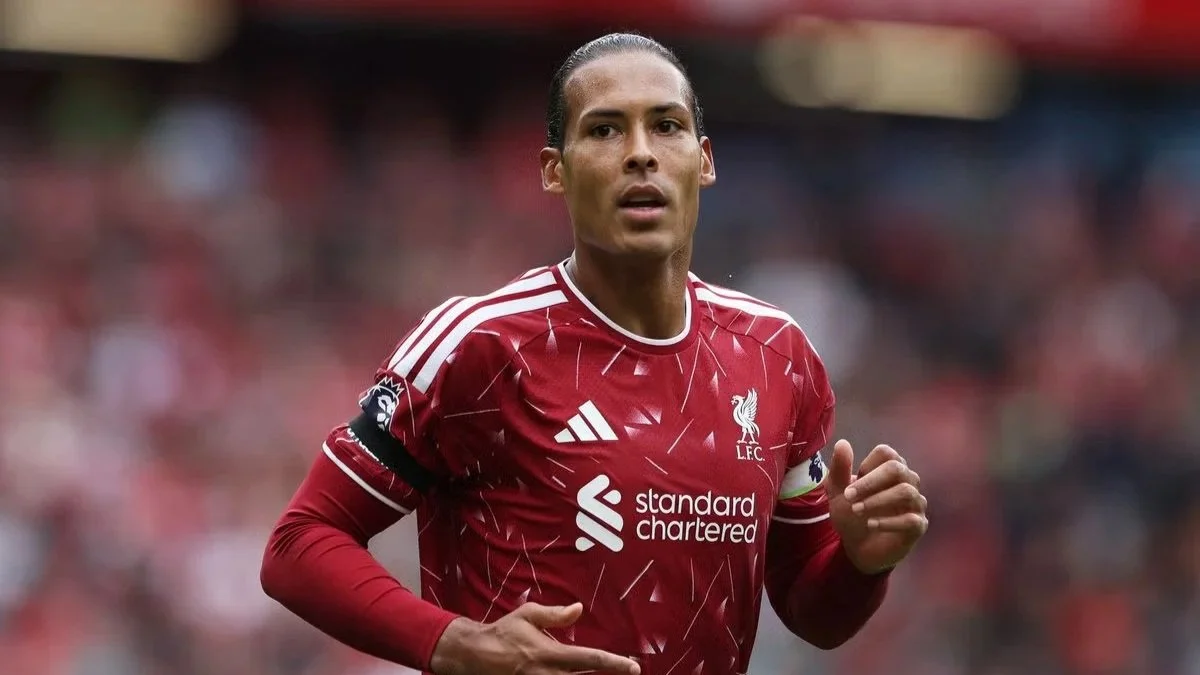
On September 8, Liverpool FC announced Turkish Airlines as their new front-of-shirt sponsor, replacing Standard Chartered from the 2027-28 season in a five-year deal worth £300 million, the most valuable front-of-shirt-only commercial deal in Premier League history. It is also the first change to that particular space on the Liverpool shirt in 17 years, and only the sixth shirt sponsor in the club's history since Hitachi first appeared on the red jersey in 1979.
Liverpool's chief commercial officer Ben Latty described the front of the shirt as "a special place in the history of our club." Most commercial announcements avoid that kind of language because it complicates the transaction. Acknowledging that what goes there matters beyond its financial value invites the question of whether the decision was made with that mattering in mind. This piece takes that question seriously, not just for Liverpool, but across a spectrum of commercial arrangements in sport that reveal very different answers to the same underlying question: what is this organization, and how much of its identity is genuinely its own?
What a Shirt Sponsor Actually Communicates
The front of a football shirt is the most visible surface a club occupies in the world. More than the badge, more than the stadium name, more than any content the club produces on any platform, the shirt sponsor is what millions of people see every time they watch a match, buy a replica, or scroll past a highlight. It sits at the center of the most immediate visual expression of what the club is, and what it says matters whether or not the organization has thought carefully about what it is saying.
Standard Chartered appeared on Liverpool's shirt in 2010 and remained there through five managers, multiple Champions League campaigns, the end of a thirty-year wait for a league title, and a period of sustained success that made the club's identity feel more settled than at any point in decades. By the end of that relationship, most fans barely registered the name on the front of the shirt. The bank had become part of the visual language of Liverpool football in a way that required no conscious attention, fading into the background so completely it had ceased to communicate anything in particular. Whether that invisibility represents perfect integration, where the sponsor has become genuinely woven into the club's expression, or simple wallpaper, where familiarity has erased the communication entirely, is a question worth sitting with.
Turkish Airlines replaces Standard Chartered with £60 million annually. The airline brings its own identity, connecting more than 300 destinations globally, a premium positioning in its sector, and a specific cultural geography that connects Liverpool to markets the bank did not emphasize in the same way. What that communicates about Liverpool, what it says about who the club considers its audience to be and where it sees its commercial future, is a genuinely different question from what the deal is worth financially. Whether that communication question was part of the decision-making process is something only Liverpool's commercial team can answer honestly, but the shirt will communicate something regardless. It always does.
The EuroLeague's Confidence Statement
In July 2025, the EuroLeague ended its 15-year naming partnership with Turkish Airlines and became, simply, the EuroLeague. The competition had been known as the Turkish Airlines EuroLeague since 2010, the airline's name appearing in every broadcast, every press release, and every piece of official communication the league produced across fifteen seasons. A naming partnership is structurally different from a shirt sponsorship, the partner's name becomes part of how the organization itself is referred to rather than appearing on an athlete's kit, but the underlying identity question it raises is the same: how much of what this organization is called, and therefore how it is understood, belongs to a commercial relationship rather than to the organization itself?
When the partnership ended, the EuroLeague did not seek a replacement. CEO Paulius Motiejunas said the move reflected the league's maturity, its belief that the competition no longer needed to align itself with a naming partner to be recognized globally. Going forward, the EuroLeague would have sponsors of different tiers but no naming sponsor, no external name preceding its own in any communication.
That is a confidence statement about organizational identity of a kind that most sports properties never reach. The EuroLeague decided that its own name was worth more than the revenue a naming partner provides, that the clarity and commercial flexibility of owning its identity fully outweighed the financial upside of sharing it. What makes the decision genuinely interesting is that it was made deliberately, as a strategic choice about how the league wanted to be known, rather than being forced by a sponsor who chose not to renew. An organization that drops a naming partner by choice rather than necessity is one that has thought seriously about what its own name is worth and concluded that the answer is more than any single commercial relationship can offer.
When the Corporate Identity Becomes the Club
The most extreme version of the relationship between commercial identity and organizational identity sits not in sponsorship arrangements but in clubs where the two things are inseparable from the beginning, where the commercial relationship did not attach itself to an existing organization but created one.
Bayer 04 Leverkusen was founded in 1904 as a sports association for employees of Bayer AG, the German pharmaceutical and chemical company. More than 120 years later, the company's name still appears on the badge, the stadium, and every official reference to the club. The relationship did not start as a commercial partnership that deepened over time. The club exists because of the company, and Bayer Leverkusen's identity and Bayer AG's identity are not separate things that happen to be commercially aligned. They are, at the foundational level, the same thing. The pharmaceutical giant's league title in the 2023-24 season was one of the most complete expressions of long-term corporate sports investment producing genuine competitive excellence that modern football has produced, and the Bayer name on the badge is not a sponsor's logo placed over an existing identity but part of the original identity itself.
RB Leipzig represents the contemporary version of the same dynamic, applied to a club with no pre-existing history. Red Bull GmbH purchased the playing rights of fifth-tier club SSV Markranstädt in 2009 with the explicit intention of building a Bundesliga club that would carry the Red Bull brand into German football. German Football Association rules prohibit corporate names in club identities, which produced one of sport's more creative workarounds: the club was officially named RasenBallsport Leipzig, Lawn Ball Sports Leipzig, abbreviated to RBL, carrying the Red Bull identity through colors, branding, and every available commercial surface without technically placing it in the official name.
The resistance RB Leipzig generates among German football supporters is not primarily about their football or their success in the Bundesliga. It is about what the club represents, the idea that a sporting identity can be manufactured from a commercial brief rather than grown from a community, that the attachment fans feel toward a club can be engineered rather than accumulated. Whether that resistance is philosophically right or commercially irrelevant depends on what you believe sport is for, but its existence illustrates how deeply the question of who a club is and who its identity genuinely belongs to runs through the culture of the game.
The Spectrum and What It Reveals
Liverpool, the EuroLeague, Bayer Leverkusen, and RB Leipzig represent four different positions on a spectrum that most sports organizations occupy somewhere along without having fully examined where they stand or why.
At one end, Liverpool carries an identity so specifically accumulated, so historically grounded and clearly its own, that changing the name on the shirt every decade or two does not shift what the club fundamentally is. Standard Chartered did not make Liverpool what it became under Klopp. Turkish Airlines will not make Liverpool what it becomes under whoever follows. The shirt sponsor is a commercial layer applied to something that exists independently of it, and the club's identity sits beneath the commercial relationship rather than depending on it.
The EuroLeague occupies a different and in some ways more instructive position, having used a naming partnership for fifteen years to build global recognition, and then deciding that the recognition was established enough to stand without the partner's name preceding its own. That journey, from needing the commercial association to choosing to leave it, is a map of how organizational confidence about identity develops over time when the underlying product is genuinely strong.
At the other end of the spectrum, RB Leipzig is a club whose identity and commercial interest are not separate layers but fundamentally the same thing, where the organizational reason for existence is commercial and the football is the mechanism through which that commercial purpose is expressed. The distance between Liverpool and RB Leipzig on this spectrum is not primarily a distance in success or resources but a distance in the relationship between commercial partnership and organizational identity, in how much of what each club is belongs to something built from the inside rather than applied from the outside.
Between those positions sits the majority of sports organizations, carrying commercial relationships that have shaped their identity in ways they have not fully examined. The stadium named after a bank that no longer operates in the local market. The competition known by a sponsor's name for so long that the underlying brand has become secondary. The kit deal that reflects what the market was willing to pay rather than what the club is trying to say about itself. None of these are catastrophic in isolation, but all of them represent commercial decisions made without fully asking the identity question first, and that gap tends to become visible at exactly the moments when identity matters most.
What the Logo Is Saying
Liverpool's Turkish Airlines deal will appear on the shirts of millions of fans across the world from 2027, generating £60 million annually for one of the sport's most commercially sophisticated clubs. The EuroLeague's decision to stand on its own name cost it a naming revenue stream it decided it no longer needed. Bayer Leverkusen has carried a pharmaceutical company's name on its badge for more than a century because the company and the club were always the same thing. RB Leipzig invented a name to carry a corporate identity that football's rules would not otherwise permit, and built a Bundesliga contender on that foundation.
Each of these is a different answer to the same underlying question, and the answers reveal something important about what commercial partnerships actually do to organizational identity when they are taken seriously rather than treated as revenue decisions with branding attached.
The organizations that know clearly what they are can approach partnerships from a position of strength, confident that the commercial relationship serves the identity rather than replacing it. The ones that have never fully asked the question find out the answer when the contract ends, the logo comes off the shirt, and what remains is either something real that was always there or a space that needs filling again.
The front of the shirt communicates something either way. The only question is whether the organization decided what it was saying, or left that decision to the highest bidder.