What It Took to Build a World Cup Team From Nothing
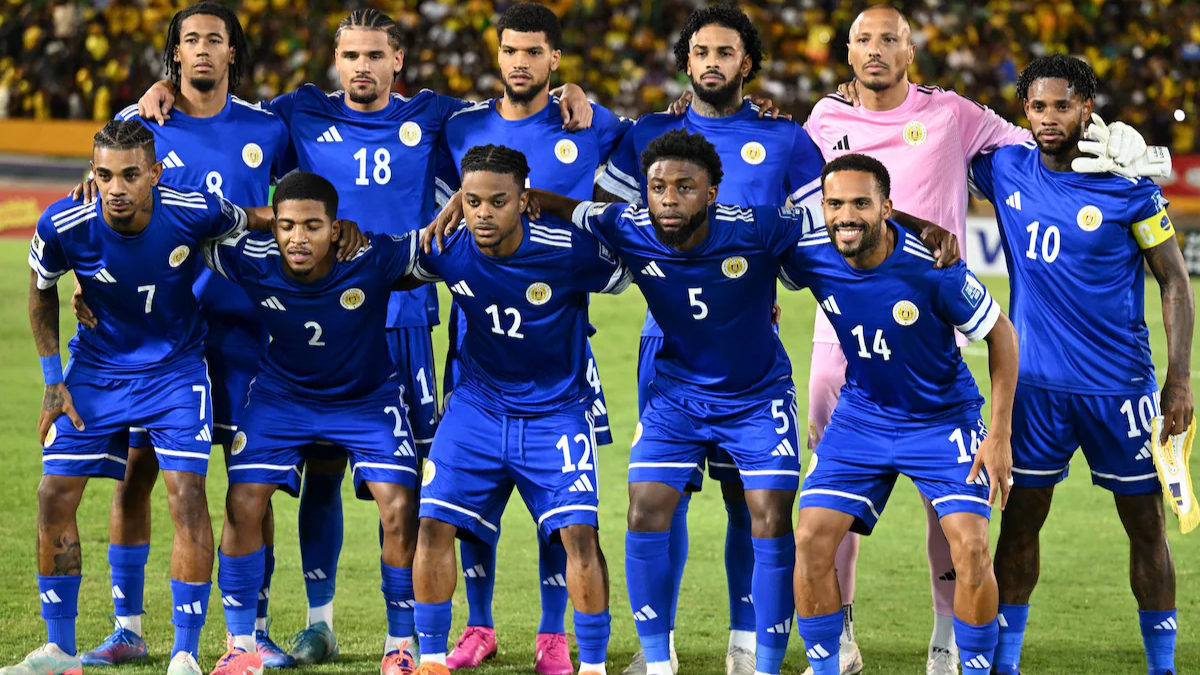
On November 18, 2025, Curaçao drew 0-0 with Jamaica in Kingston. The result meant Curaçao topped their qualifying group and secured a place at the 2026 FIFA World Cup. A nation of roughly 150,000 people, with a land area of 171 square miles, became the smallest country by both population and area ever to qualify for football's biggest tournament.
The story has been told, correctly, as a remarkable underdog achievement. What gets less attention is the more instructive part of it: how a nation with no World Cup history, no significant footballing infrastructure relative to its competitors, and no obvious reason to expect this outcome actually built toward it. The answer is not luck, and it is not a sudden generation of unusual talent appearing at the same moment. It is more than a decade of deliberate identity construction, carried out by specific people who believed in something before there was any evidence to justify that belief.
That order matters. The identity work came first. The results came after. And the sequence is the entire lesson.
The Architecture Nobody Saw
Remko Bicentini is not a name most football fans outside the Caribbean would recognize, but he is the person most responsible for the foundation Curaçao's 2026 World Cup squad now stands on. Bicentini coached the Netherlands Antilles, Curaçao's predecessor as an international football entity, from 2009 to 2010, served as an assistant from 2008, then became Curaçao's assistant coach from 2011 to 2016 before being named head coach twice, first from 2016 to 2020 and again from 2022 to 2023.
Across that span of nearly fifteen years, Bicentini developed and executed a specific plan: identify players of Curaçaoan heritage, most of them born and developed in the Netherlands, and build a genuine case for why they should represent the island internationally rather than pursue other paths or simply forgo international football altogether. He gave the majority of the current World Cup roster their first caps for the national team.
This was institution building in the truest sense. Not a single decision or a single transfer window, but a sustained, multi-year project carried out by someone who believed the destination was real long before the football world had any reason to take that belief seriously. The players who eventually qualified for the World Cup did not appear from nowhere. They were identified, recruited, and developed within a structure that Bicentini and others built specifically because they believed it would eventually matter.
The Recruitment of Belief
The clearest individual illustration of how this worked is the relationship between Jurgen Locadia and Eloy Room, both born in the Netherlands with Curaçaoan heritage, both teammates at USL Championship side Miami FC.
Locadia grew up dreaming of playing for the Netherlands. He came through Dutch youth national teams and was selected for the senior Oranje squad on occasion, building a career with Dutch professional clubs that kept the door to full Dutch international honors at least theoretically open. When friends, and eventually Room, began trying to recruit him to play for Curaçao, his first instinct was to decline. He told Room directly that qualifying for a World Cup with Curaçao was not realistic.
Room, who had already committed to the Curaçao national team, kept the conversation going. According to Locadia, that persistence mattered as much as any tactical argument. Room believed in something specific enough and consistently enough that the belief itself became persuasive over time. Four years before Curaçao's eventual qualification, Room was already selling teammates on a vision that most people, including the players being recruited, considered implausible.
This pattern repeated across the squad in different forms. Players with Dutch passports and Curaçaoan roots, most of them not quite at the level required to seriously compete for the Dutch national team but carrying genuine heritage and connection to the island, had to be convinced that representing Curaçao was a meaningful pursuit worth committing to, not a consolation or an afterthought. That conviction did not happen automatically. It had to be built, argument by argument, relationship by relationship, often over years, by people who were themselves already committed.
What Identity Construction Actually Requires
Building a footballing identity for a nation with no World Cup history and a limited domestic football infrastructure requires answering questions that established football nations never have to articulate explicitly, because their answers were settled generations ago.
What does it actually mean to play for Curaçao? Why should a talented player based in the Netherlands, with options ranging from a professional career that never involves international duty to a genuine if longshot pursuit of Dutch selection, choose instead to commit to a Caribbean island's national team project that has never qualified for anything close to football's largest stage?
There is no obvious answer to that question. It had to be constructed. Bicentini, Room, and others had to build a case that was specific enough, emotionally resonant enough, and credible enough that players would commit years of their international availability to a project with no guaranteed payoff. That construction work is identity work in its purest form: defining what something represents clearly enough that people are willing to invest in it before the evidence exists to justify the investment.
The players who said yes to that case were not betting on a sure thing. They were betting on a story that had not yet been proven true, told by people who believed it deeply enough to make the belief contagious.
The Credibility Layer
The hiring of Dick Advocaat in January 2024 added something the grassroots belief-building work could not provide on its own. Advocaat, a 78-year-old Dutch coach with three separate spells in charge of the Netherlands national team and World Cup experience at multiple tournaments including a run to the quarterfinals with the Oranje at USA 1994, brought external credibility that signaled something important to players, to FIFA, and to the broader football world: this was a serious project, led by someone whose judgment carried weight independent of any sentimental attachment to the island.
Advocaat's qualifying campaign was statistically excellent. Curaçao scored 28 goals across ten qualifying matches, the best mark of any team in the CONCACAF region during that cycle. But his presence mattered as much for what it represented as for what it produced tactically. A coach of his stature choosing to lead Curaçao's project validated years of work that had, until that point, existed largely outside the football world's attention.
Advocaat's own story this year adds a layer of human stakes that makes the broader narrative even more resonant. He resigned in February 2026 to care for his daughter during a health crisis. Fred Rutten took over, lasted two matches amid disagreements with players and pressure from the team's sponsor, and Advocaat returned in May once his daughter's health improved. At 78, he became the oldest manager in World Cup history, leading a team built by more than a decade of identity work into the tournament he had helped make credible.
What the Tournament Revealed
Curaçao's opening match against Germany on June 14 ended 7-1. Livano Comenencia scored the first goal in the 21st minute, the first in Curaçao's World Cup history. The scoreline reflected the gap in resources and depth between the two nations. It did not reflect what the moment meant.
Five days later, Curaçao drew 0-0 with Ecuador. Goalkeeper Eloy Room, the same player who spent years convincing teammates to believe in a project that did not yet exist, made 15 saves, one short of Tim Howard's all-time record for saves in a single World Cup match. Curaçao earned their first ever World Cup point.
Neither result will be remembered primarily for its football significance. What they represent is something more durable: a nation that built an identity from nothing, over more than a decade, showing up on football's largest stage and being unmistakably present, competitive, and real. The identity that Bicentini, Room, Advocaat, and dozens of others constructed years before anyone outside the Caribbean was paying attention held up under the most extreme pressure the sport can offer.
The Order That Matters
Curaçao's qualification will be remembered as one of the great underdog stories in World Cup history, and it deserves that recognition. But the headline obscures the more instructive part of the story, which is not about what happened in November 2025 or in Houston and the matches that followed. It is about everything that happened in the decade before that, when there was no reason to believe any of it was coming.
Nations, organizations, and individuals do not arrive at moments like this by accident. They arrive because specific people did specific work, often for years, constructing a sense of identity and belief substantial enough to carry a project past the point where it stopped feeling like instinct and other people stopped believing it was possible. Bicentini built the architecture. Room recruited the belief, one teammate at a time. Advocaat added the credibility that made the project legible to the wider football world.
The qualification was the result. The identity work was the cause. Most stories about this kind of achievement get the order backwards, treating the result as the story and the years of construction beforehand as a footnote.
For Curaçao, the footnote is the entire story. The qualification just made it visible.