Build It In or Bolt It On
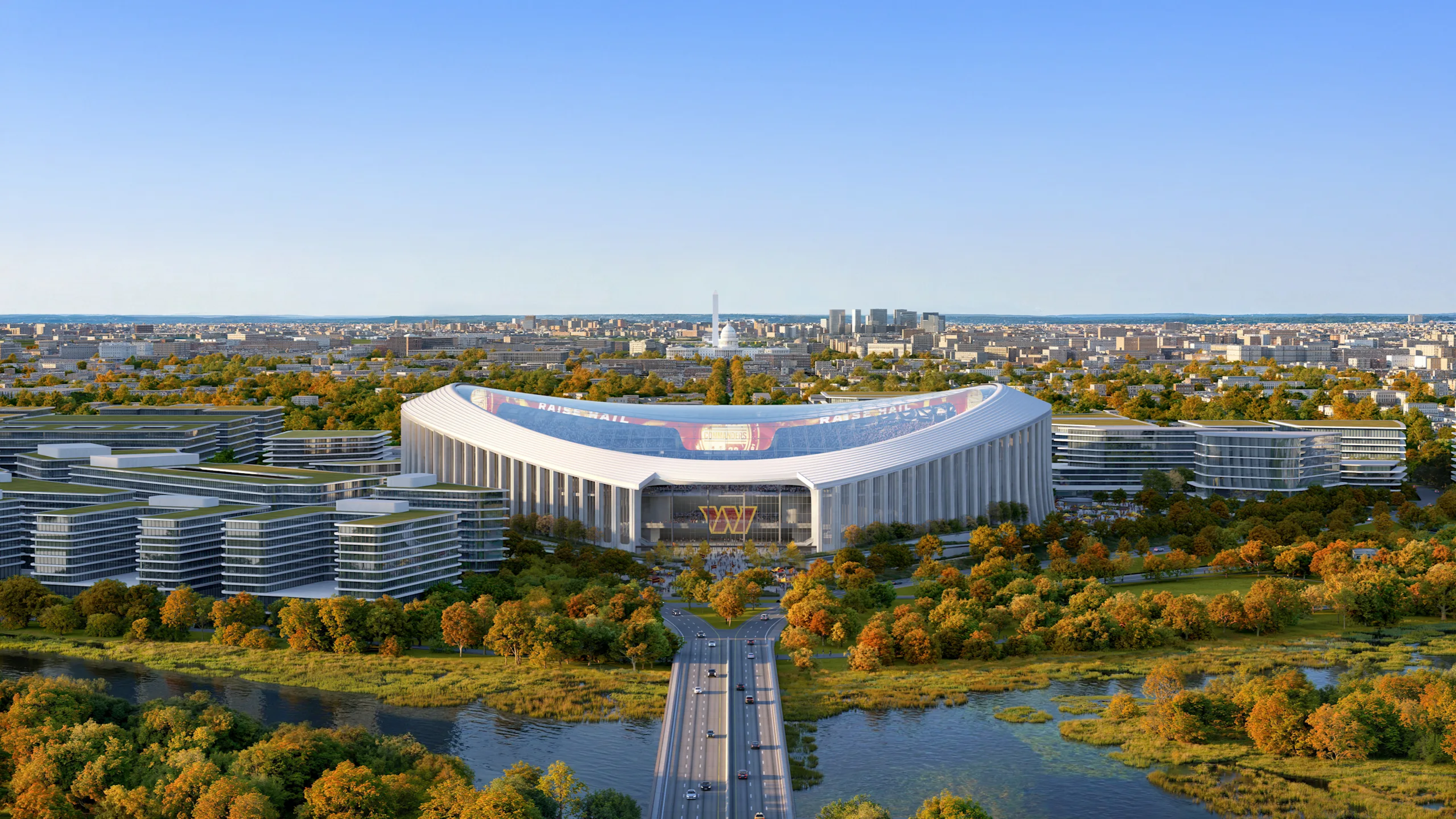
On June 17, the Washington Commanders issued a request for information seeking AI capabilities for their new $3.65 billion stadium at the RFK site in Washington D.C. The stadium, designed by HKS and scheduled to open in 2030, will be the franchise's return to its spiritual home after nearly 30 years playing in Landover, Maryland. The project represents the largest private investment in DC's history, with the Commanders contributing $2.7 billion of the total cost.
The RFI covers a wide range of technology categories: fan engagement software, personalization engines, computer vision systems, venue operations, security infrastructure, and AI-native startups with products relevant to live sports and entertainment. It is a comprehensive document, and the technology conversation it has generated is legitimate and interesting.
But the line that deserves the most attention is not about technology at all.
"We are not seeking traditional technology proposals. We are seeking information from firms that can help us imagine what becomes possible when a stadium is conceived, designed, and operated with AI as a foundational capability rather than a bolt-on feature."
Foundational capability rather than a bolt-on feature. That distinction is worth examining carefully, because it describes a way of thinking about organizational development that extends well beyond the question of which AI vendors the Commanders eventually choose.
What Foundational Actually Means
The difference between foundational and bolt-on is not semantic. It is structural, and it determines everything about what gets built and what it can eventually become.
A stadium designed with AI as a foundational capability looks physically different from one where AI is added afterward. The sensor networks embedded in the building's infrastructure, the data architecture that connects fan experience across every touchpoint, the physical spaces designed around personalization and real-time responsiveness, none of these can be retrofitted efficiently. They have to be conceived at the beginning, before the concrete is poured and the steel is placed, or they never work as well as they should. The integration is too complex, the compromises too significant, the cost of undoing what was built without them too high.
This is not a technology principle. It is a design principle, and it applies to every element of what an organization is trying to build.
The experience a sports organization creates for its fans is foundational or bolt-on. The relationship it builds with its community is foundational or bolt-on. The identity it develops, the clear and specific sense of what it represents and who it is trying to serve, is foundational or bolt-on. In each case, the difference between the two approaches is not visible in the short term. Both can produce something that functions. The difference becomes visible over time, in whether the organization accumulates clarity and coherence as it grows, or whether it keeps discovering that the things it should have built in from the start are missing and expensive to add later.
The Blank Canvas
The RFK site represents something genuinely rare in professional sport. A franchise returning to its home city after three decades away, with a blank canvas, approved funding, four years of development runway, and the opportunity to make every significant decision about what the organization is building before a single fan walks through the door.
Most sports organizations never get a moment like this. They inherit what already exists: the identity built by previous ownerships, the stadium designed by previous architects, the fan relationship shaped by decades of decisions they had no part in making. Change is possible, but it is always more expensive and more complicated than building correctly from the beginning. The existing foundation constrains what can be added, shapes what feels coherent and what feels forced, and limits how far the organization can move without losing the continuity that makes it recognizable.
The Commanders' blank canvas is an extraordinary opportunity. It is also an extraordinary responsibility, because what gets built into the foundation now will shape everything that follows for decades. The AI infrastructure is one layer of that foundation. The experience design is another. The community relationship the franchise builds with Washington D.C. upon its return, after 30 years away and a decade of organizational turbulence under previous ownership, is perhaps the most important foundational question of all.
The RFI is the Commanders asking technology firms to help them think about one layer of the foundation correctly. The same rigor applied to every other foundational layer would produce something exceptional.
Where Organizations Go Wrong
The bolt-on pattern is not unique to technology. It is the default approach to almost everything that should be foundational in sport, and in most organizations operating outside sport too.
Identity gets treated as a communications exercise. The organization builds the product, achieves some results, and then asks what story should be told about it. The story is constructed after the fact, shaped by what already exists rather than by a clear sense of what the organization wants to become. It is layered on top of something that was never designed to carry it, and the result is communication that feels slightly disconnected from the reality it is describing, polished but not quite true.
Fan experience gets designed around what fits in the available space rather than around what the organization believes the relationship with its community should feel like. The concessions are placed where the infrastructure allows. The sightlines reflect the seating configuration that maximized capacity. The atmosphere is whatever emerges from the combination of those decisions rather than something deliberately created. The experience is adequate without being distinctive, and adequate experiences do not build the kind of loyalty that survives a losing season.
Positioning gets addressed when results make it urgent rather than built deliberately before it is needed. A run of poor form, a key player departure, a sponsor asking what the organization actually stands for, these moments expose the absence of something foundational that was never built. The organization scrambles to articulate something that should have been clear years earlier, and the scrambling is visible to anyone paying attention.
In each case, the pattern is the same. The hard questions get deferred until after the easy ones are answered, and by then the easy ones have already shaped the answers to the hard ones in ways that are difficult to undo. The bolt-on version of anything, technology, identity, experience, community relationship, is always more expensive and less effective than the foundational version. The gap between them widens over time rather than closing.
What the Commanders Are Actually Deciding
The Commanders' return to Washington carries narrative weight that most franchise relocations do not. RFK Stadium hosted some of the most celebrated moments in NFL history during the franchise's glory years. The team played there from 1961 to 1996, building three Super Bowl championships and one of the most passionate fan cultures in the league during that period. The new stadium sits on the same ground, directly across from the US Capitol and the Washington Monument, in the geographic and symbolic heart of the nation's capital.
What the Commanders represent to Washington D.C. in 2030 is not yet determined. The franchise spent most of the last decade under previous ownership dealing with significant organizational dysfunction that eroded the relationship between the team and its city. The new ownership group led by Josh Harris has spent the last two years rebuilding that relationship, and the RFK project is the most visible expression of that rebuilding. The return to the District is a chance to reestablish what the Commanders mean to Washington, to define the relationship before it calcifies into whatever the first few seasons produce.
That is a foundational question. It requires the same deliberate thinking that the Commanders are applying to their AI infrastructure. Not what story can we tell about who we are, but what do we actually want to be, and how do we build the organization so that everything, the stadium, the experience, the community engagement, the commercial relationships, reflects that answer consistently over time.
The AI RFI is the right question asked of the right people for one specific layer of the foundation. The deeper question, about identity and what the franchise wants to represent to its city upon its return, deserves the same rigor applied with the same urgency. Both questions have the same deadline. 2030 is four years away. Some things can be added later. The foundational ones cannot.
The 50-Year Decision
A stadium built in 2030 will still be shaping the fan experience in 2060 and beyond. The technology will be updated. The rosters will turn over dozens of times. The coaching staffs, the ownership structures, the league context will all change in ways that nobody can predict. What will not change is the physical foundation of the building and the organizational decisions made before it opened.
The Commanders understand this for the technology layer. The RFI makes that explicit: they want AI conceived as foundational rather than added afterward, because they understand that what you build into the foundation shapes everything that follows and cannot be efficiently undone once it is set.
That understanding, applied consistently to every foundational layer of what they are building, would produce something that earns the significance of the site it occupies and the return it represents. A franchise coming home after 30 years, in a stadium built with the right foundations in place, representing something specific and genuine to the city it is returning to.
The bolt-on version of that story is available and easier. Build a beautiful stadium, add the technology, run the communications, and see what the organization becomes. The foundational version requires asking the harder questions first, before the easier ones have already shaped the answers. The Commanders are asking one set of those questions correctly. The others are equally important, and equally time-sensitive.
Build it in. Not on.