Performance Gets You to the Finals. Narrative Determines What They Are Worth.
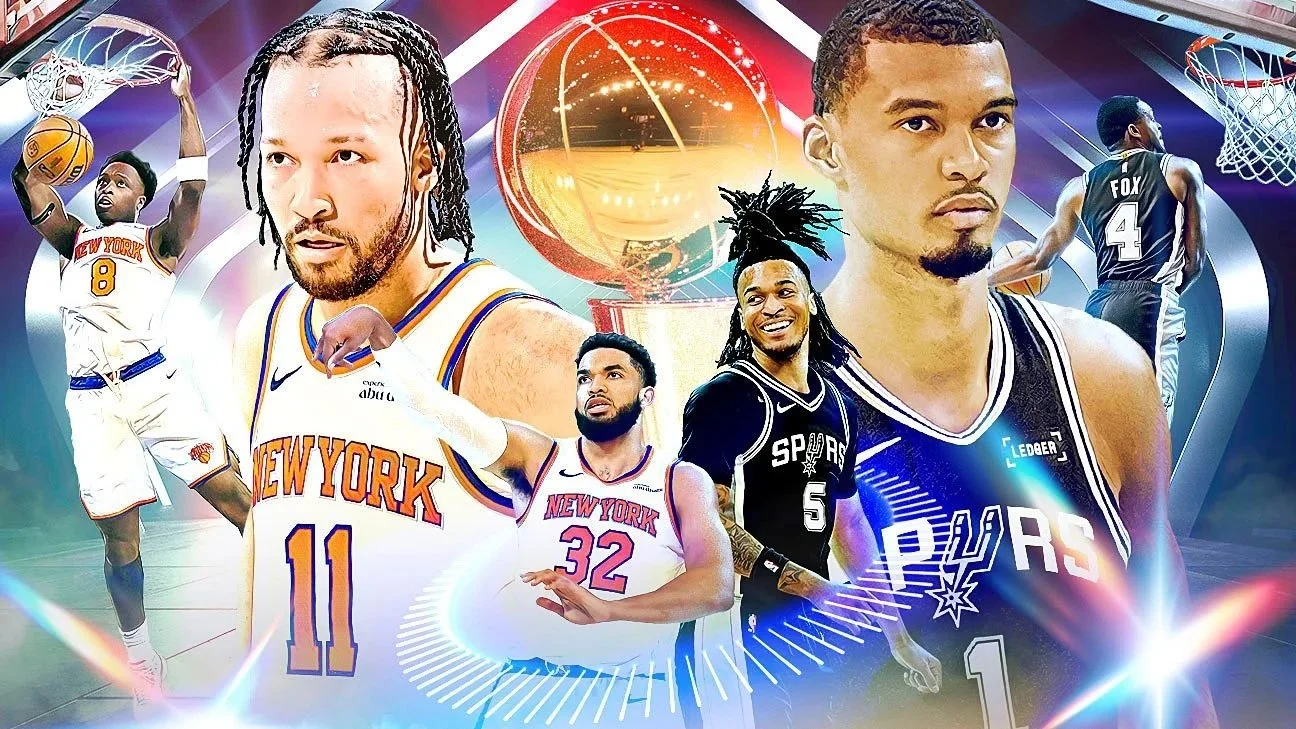
Before Game 2 of the 2026 NBA Finals tipped off on Friday night, Disney had already sold out its advertising inventory through Game 4. Eighty-eight advertisers. More than 200 sponsorship executions. Twenty-four first-time brands. Scatter demand surging. Games 5 through 7 still available if the series goes the distance, and already being sold.
The Knicks lead the series 2-0. Madison Square Garden awaits for Games 3 and 4. A city that has not celebrated an NBA championship since 1973 is closer to one than it has been in over half a century.
The sellout is being covered as a media business success story. It is worth reading as something more fundamental than that. What Disney sold out is not advertising space. It is access to a narrative. And the fact that brands paid a premium for that access before a single point was scored in Game 2 is one of the clearest illustrations sport has produced in years of how narrative creates commercial value that performance metrics alone cannot.
What Brands Are Actually Buying
Danielle Brown, Disney's senior vice president of sports streaming and brand solutions, was direct about what drove the demand. The Knicks have a chance at their first championship since 1973. Victor Wembanyama brings an international dimension to the Finals. Inside the NBA is handling Finals coverage for the first time. Brands, she said, are really investing and want to be part of the conversation.
That sentence deserves more attention than it typically receives in media business coverage. Brands want to be part of the conversation. Not part of the broadcast. Not part of the audience. Part of the conversation, which is a fundamentally different thing. A conversation has stakes. It has history and unresolved tension and a direction that people are genuinely invested in. You do not want to be part of a broadcast. You want to be part of something that matters to people before you show up and after you leave.
AmEx, Eli Lilly, and Kia are spending around this series. Twenty-four brands are activating at the Finals for the first time. PAZE, an online checkout solution and digital wallet, is among the first-timers. These are not companies that made their decision based on a breakdown of the Knicks' defensive rotations or the Spurs' pick-and-roll efficiency. They made their decision based on the story surrounding the series, on whether being absent from this particular moment would feel like a missed opportunity. It would. And they paid accordingly.
The Knicks as a Narrative Asset
The New York Knicks have not been a great basketball team for most of the last 53 years. Between 1973 and the Jalen Brunson era, their playoff history is largely a story of near-misses, dysfunction, and the specific kind of institutional suffering that only the most historically loaded franchises can produce. Patrick Ewing never got a ring. The Spike Lee courtside era never became a dynasty. The franchise went from being one of the most glamorous addresses in the sport to one of the most reliably disappointing.
What the Knicks never lost is their narrative weight. Madison Square Garden is the most famous arena in the world. New York City is the largest media market in the country and one of the most globally resonant cultural addresses on the planet. The Knicks' championship drought is not just a sports statistic. It is a story that has accumulated meaning with every passing year, every first-round exit, every season that ended in disappointment for a fanbase that has been told, implicitly and explicitly, that their team would eventually figure it out.
Jalen Brunson did not create that narrative asset. He activated it. In four years, he has led the Knicks to 35 playoff wins, the most dominant run to the Finals by an Eastern Conference team since the current playoff format began, and the kind of institutional transformation that turns historical weight from a burden into a commercial resource. The brands buying Finals inventory are not just buying access to a basketball series. They are buying access to the resolution, or non-resolution, of a story that has been building for 53 years. That story exists independently of whether the Knicks win. It will be compelling either way, which is exactly what makes it commercially valuable before tip-off.
Wembanyama as a Narrative Asset
The Spurs side of the equation is different in character but equal in commercial weight. Victor Wembanyama is 22 years old. He has already won Rookie of the Year, Defensive Player of the Year unanimously, and reached his first NBA Finals. If he wins, he becomes the second youngest Finals MVP in history. If he loses, he begins what will almost certainly be a long run at the title with a young Spurs team that is far ahead of the timeline anyone projected.
Disney's SVP explicitly cited Wembanyama's international dimension as a commercial driver. That dimension is not purely about his talent, though the talent is extraordinary. It is about the narrative around the talent. The generational framing that has followed him since before his NBA debut. The weight of expectation that every appearance at the highest level carries for a player already being discussed in the same breath as the greatest to ever play. The question of whether he becomes the defining player of his era is one that every Finals appearance at 22 years old makes more urgent, and brands buying into the Finals are buying into that question as much as they are buying into the basketball itself.
The Spurs took down the defending champion Oklahoma City Thunder in seven games to reach this Finals. Shai Gilgeous-Alexander, the reigning MVP, could not stop them. The narrative of a young team ahead of schedule, led by a player who makes every game feel like a chapter in something larger, is exactly the kind of story that compounds commercially the longer it runs.
What the Sellout Actually Proves
The NBA Finals sellout is an unusually transparent window into something that operates across all of sport but is rarely this visible in commercial terms. The value of a sporting event is not determined purely by the quality of the competition. Two evenly matched teams playing excellent basketball does not automatically produce a sellout. Two teams carrying unresolved historical weight, generational talent, and a city's 53-year wait produces one before the second game tips off.
The difference is not the basketball. It is everything built around and underneath the basketball over time.
This is the mechanism that most sports organizations understand abstractly but rarely build deliberately. Narrative creates commercial value. The organizations and athletes that build their narrative with intention, before the commercial moment arrives, find that when it does the value is already there waiting to be activated. The organizations that do not build it find themselves with a good product and a thinner commercial proposition than their results would seem to justify.
The Knicks did not plan their 53-year drought as a narrative strategy. But the accumulated weight of that history is now one of the most commercially valuable assets in American sport. Wembanyama did not engineer the generational framing around his career. But it exists, it is real, and it is driving first-time brands to buy Finals inventory for the first time. Neither of these things happened because someone sat down and decided to build a narrative. They happened because genuine things accumulated over time into something that the market recognized as worth paying for.
The deliberate version of that process is what separates the organizations and athletes that consistently command premium commercial relationships from the ones that produce strong results without generating proportional commercial value. Understanding what your story is, building it consistently, and protecting it from the decisions that would dilute it, is not separate from the commercial work. It is the foundation of it.
The Inverse
It is worth being precise about what this means for the series and matchups that do not produce this kind of commercial response, because they are the more common case.
Equally talented rosters playing equally competitive basketball have generated significantly less advertiser demand in previous Finals because the narrative surrounding them was thinner. Two great teams with strong regular season records but no particular unresolved story to tell produce a good sporting event and a competent commercial package. The difference between that and a sellout before Game 2 is not measurable in points per game or defensive rating. It is measurable in the emotional stakes the audience brings to the series before it starts, in whether people feel the weight of what is happening rather than simply observing it.
The NBA has understood this intuitively for decades. The league has consistently produced Finals matchups that feel narratively loaded, through scheduling, storytelling, and the cultivation of franchise identities that carry meaning beyond the current roster. The sellout is not an accident of market forces. It is the commercial expression of decades of deliberate narrative infrastructure built around the league's most important franchises and its most compelling individual stories.
53 Years
Game 3 is tonight at Madison Square Garden. The Knicks lead the series 2-0. A city that has been waiting 53 years is closer to the moment it has imagined than at any point in most of its fans' lifetimes.
Wembanyama is 22 years old and already carrying the weight of a generation's expectations in the opposite direction, trying to prevent that moment from arriving.
Disney sold out before any of this had been decided. Because the story was already worth more than any single result could determine. The Knicks winning would complete something. The Spurs winning would extend something. Either outcome adds to a narrative that has been building for decades and will keep building regardless of what happens in the next few games.
Performance got both teams here. Narrative determined what being here is worth.
And the brands knew it before the ball was tipped.