European Basketball's Talent Drain Is Not Just a Money Problem
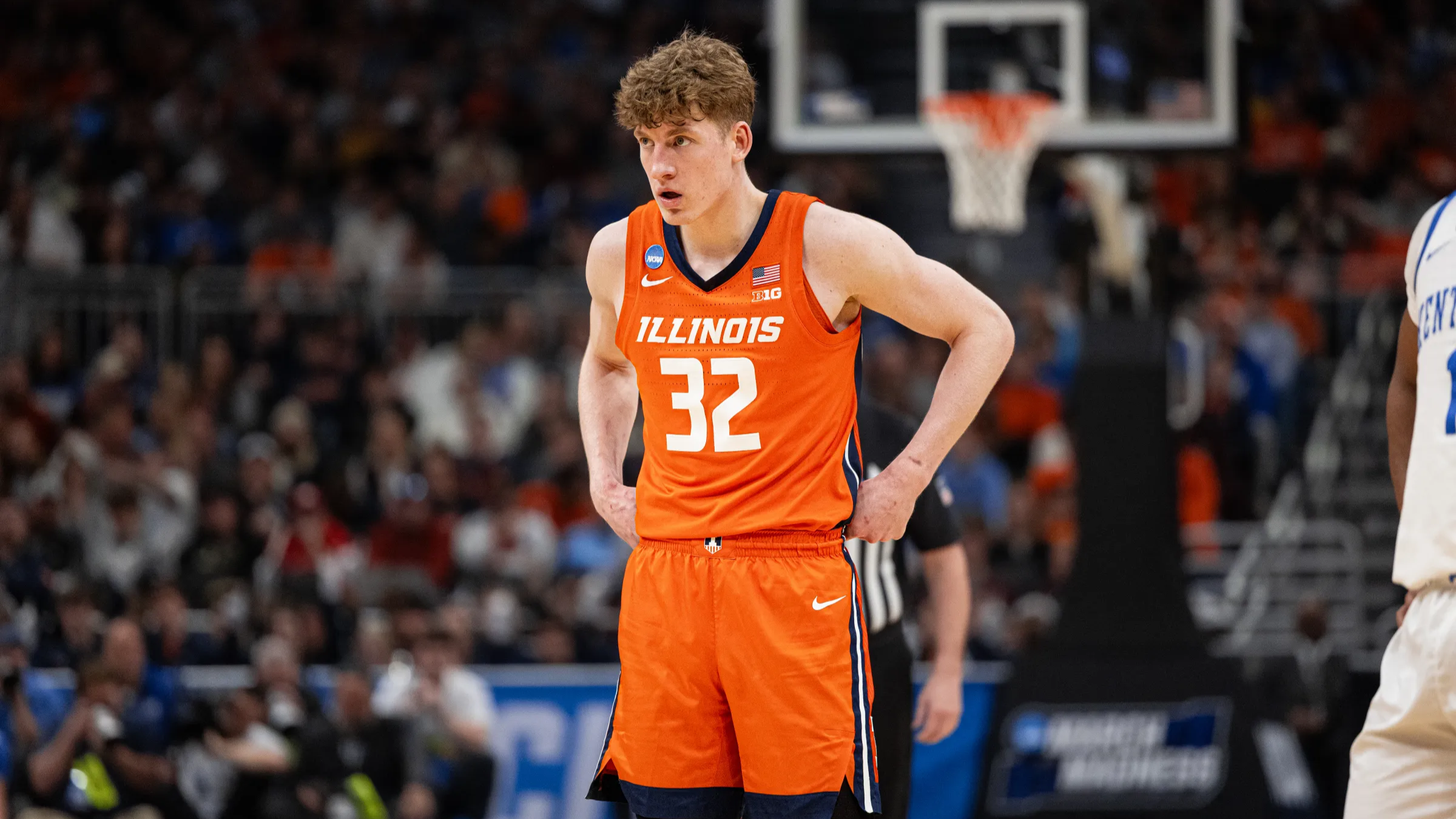
Kasparas Jakucionis was 18 years old when he turned down a spot on Barcelona's senior team to sign with the University of Illinois instead. The NIL package he received was reportedly worth six figures, money that would have been impossible to access through Barcelona's youth-to-senior pathway at that stage of his career. He spent one season at Illinois, was named Big Ten Freshman of the Year, and was selected in the first round of the NBA Draft.
The story has been told as a financial one, and the financial dimension is real. But framing Jakucionis's decision, and the broader pattern it represents, purely as a money problem misses what is actually happening in European basketball right now, and misunderstands what would be required to fix it.
The Scale of the Shift
The number of European players in NCAA basketball has increased significantly since name, image, and likeness compensation became available to college athletes. Real Madrid and Barcelona, two of the most successful youth academy systems in European basketball history, have reportedly considered scaling back their development investment because the financial equation has stopped making sense for them. Clubs spend years developing a player, covering housing, education, coaching, and competitive opportunities, only to watch that player leave for an American university at the exact moment the investment was supposed to pay off, taking the value the club built with them and leaving nothing behind.
FIBA is reportedly in talks with the NCAA about compensation structures that would address this gap, some form of payment or revenue sharing that would return value to the European clubs whose development systems produced the player in the first place. This is a sensible conversation to have, and it may eventually produce a workable financial mechanism.
But treating this purely as a financial problem, solvable with the right compensation structure, misunderstands what NCAA programs are actually offering young European players, and what European clubs are failing to offer in return.
What NCAA Programs Actually Sell
American college basketball recruiting has spent decades building an infrastructure that goes well beyond money. Dedicated recruiting staff who communicate directly and consistently with players and families. Campus visits that let a prospective player see and feel the environment before committing. Transparent conversations about role, development plan, and what the next several years will realistically look like. A recognizable brand, built over generations, that carries meaning independent of any single recruiting class. Alumni success stories that make the pathway from program to professional career feel concrete rather than abstract.
NIL money is the newest and most visible layer of what these programs offer, and it is the layer that gets the headlines because it is the easiest to quantify and the easiest to compare directly against what a European club can offer financially. But it sits on top of decades of narrative construction. By the time a player like Jakucionis is weighing an NIL offer from Illinois, he is not weighing money against money. He is weighing a fully articulated story about what the next stage of his life and career will look like against a European pathway that, by comparison, is often far less clearly communicated.
The players choosing NCAA programs are not simply choosing the larger number. They are choosing the clearer story, the one where the path forward feels legible and the people offering it have made a deliberate, sustained effort to make that legibility a competitive advantage.
What European Academies Are Not Building
This is not a criticism of the basketball development itself. By most technical accounts, the coaching and tactical education available at the top European academies, Real Madrid, Barcelona, Olympiacos, and others, is excellent, often more rigorous and more focused on fundamental skill development than what a typical NCAA program provides in a single season. European basketball has nothing to be embarrassed about on the development side.
The gap is narrative, not technical. A young player and his family evaluating a path through a European academy against an NIL offer from a major American university are rarely given an equally clear picture of both options. The European path often involves vague timelines, inconsistent communication about role and progression, and limited visibility into what success actually looks like or how it gets measured. Families making one of the most consequential decisions of a young athlete's life are often doing so with significantly less information and significantly less reassurance on the European side than on the American side.
That asymmetry matters enormously, and it has nothing to do with NIL money specifically. It existed before NIL changed the financial calculus, and it would continue to exist even if European clubs found a way to match American compensation dollar for dollar. The story European academies tell about themselves, to the players and families they are trying to retain, is simply less developed and less consistently communicated than the story American programs have spent generations building.
What Closing the Gap Actually Requires
The instinct in European basketball has been to respond to the NIL era with conversations about compensation structures, treating the talent drain as a problem that sufficient funding could solve. That instinct is understandable and the conversation is worth having. But it addresses only the most visible layer of a deeper problem.
European clubs serious about retaining young talent need to do the harder work of building and communicating a genuine, specific narrative about what staying in Europe actually means. What does the development path look like, concretely, year by year? What makes this specific environment distinct from every other option a talented young player might consider, European or American? What kind of player, and what kind of person, is the academy actually trying to produce, and is that vision communicated clearly and consistently to the families making the decision?
Clubs that do this work will retain players even without matching every dollar an NIL package can offer, because the decision a young player and family are making is rarely about money in isolation. It is about which path feels most legible, most supported, and most likely to lead somewhere real. Clubs that respond to the NIL era only by chasing the financial gap will continue losing players regardless of how much compensation eventually gets negotiated through FIBA and the NCAA, because they will still be competing in the wrong category. Money matters, but money was never the entire reason Jakucionis chose Illinois. The story was.
The Real Competition
European basketball is not just competing with American universities for talent. It is competing with a narrative infrastructure that has been built deliberately, over decades, by institutions that understood early that recruiting is not primarily a financial negotiation. It is an exercise in making a young person and their family believe, clearly and confidently, in a specific vision of what comes next.
The clubs that recognize this distinction, and start doing the work of building and communicating their own version of that story, will be the ones that find a genuine way to compete for the next generation of European talent. The clubs that wait for FIBA and the NCAA to negotiate a financial fix will keep discovering, one recruiting cycle at a time, that money was never the whole story.
It just looked that way from the outside.