What the EuroLeague SuperCup Got Right, and What It Cost Them
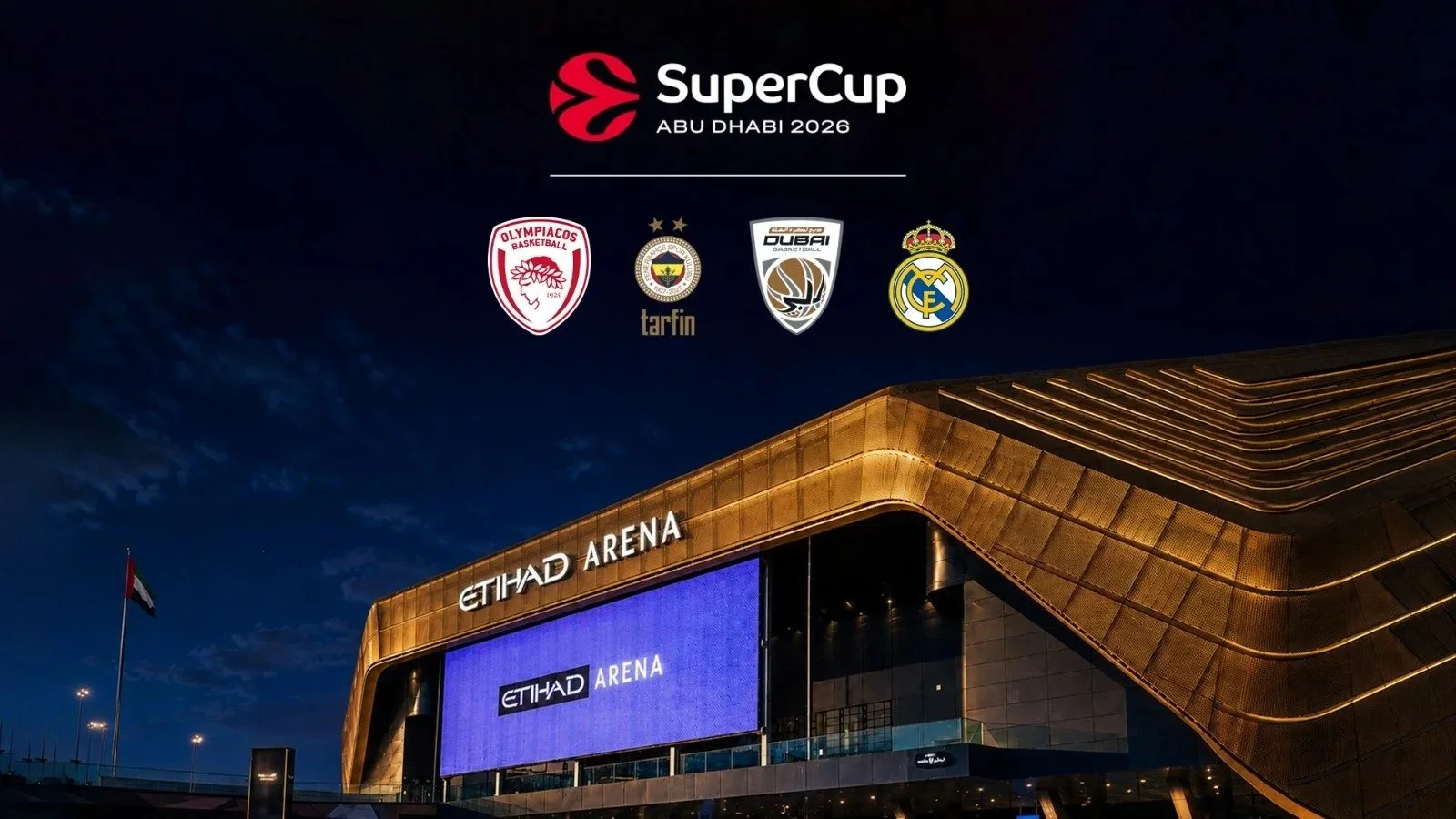
This past weekend, the EuroLeague held its first-ever SuperCup in Abu Dhabi. Four teams, a Final Four format, and basketball that lived up to the league's reputation. Close, high-pace, elite-level games throughout, capped by Real Madrid beating Olympiacos Piraeus in the final. On the court, there was nothing to criticize.
Off the court is where the real story sits, and it's one worth examining closely, because it says something about a mistake that isn't unique to the EuroLeague. It's one of the most common and most costly errors organizations make when they try to grow: treating identity as something they already have, rather than something they have to keep building.
What the EuroLeague Has Earned
None of what follows makes sense without first acknowledging what the EuroLeague actually is. Over decades, it has built itself into one of the strongest sports and entertainment products in Europe and arguably the world. That didn't happen by accident, it came from consistent decisions about competitive integrity, presentation, and storytelling. The kind of accumulated identity work that shows up clearly at events like the Final Four in Athens, where every detail, down to the narrative tension between competing clubs, has been shaped over years into something the audience recognizes and shows up for.
That earned identity is exactly why a partnership like the one behind this SuperCup was even possible. Experience Abu Dhabi, destination brand of the Department of Culture and Tourism of Abu Dhabi, and Etihad Airways, became main partners of EuroLeague Basketball, strengthening the league’s presence in the Gulf region. That's a valuable commercial opportunity, and pursuing it makes sense as part of a broader Middle-East expansion strategy.
But this is precisely where things went wrong.
The Signals That Something Was Missing
The event was announced on August 24, roughly three and a half weeks before it took place. For context, that's barely enough time to build a marketing campaign, let alone a sense of occasion. Ticket prices dropped noticeably in the days leading up to the weekend, a fairly reliable signal that demand wasn't meeting expectations. Walking around the city, there was little indication that a EuroLeague event was actually happening. Besides, most domestic European leagues held their own Supercups the same weekend, meaning attention that could have gone toward this new event was already being split before it started.
The format compounded the problem. Dubai Basketball, a relative newcomer with impressive growth and a strong level of play, was included as host rather than through the competitive route of the EuroLeague ecosystem. There was no EuroCup team present, despite this being a great chance to showcase European basketball more broadly. And the third-place game, a fixture the EuroLeague itself removed from the Final Four format in Athens just months earlier for reasons that presumably still apply, was reinstated here without much explanation.
Individually, none of these are catastrophic. Together, they point to the same conclusion: nobody had clearly worked out what this event was supposed to mean, or why it should matter to the people it was asking to show up.
The Real Cost
This is the part that matters most, and it's bigger than one weekend in Abu Dhabi.
An organization's identity and narrative are not a reservoir you fill once and draw from indefinitely. They function more like capital: earned through consistent investment over time, and either reinvested and grown through every new decision, or slowly spent down when new decisions lean on the reputation without adding to it.
The EuroLeague could stage this SuperCup, reinforce relationships with serious commercial partners, and fill the schedule with elite basketball because of the identity it built over years. That's what made the opportunity available in the first place, but the event itself didn't add to that identity. It borrowed the EuroLeague name, image, and level of play to carry something that had no story of its own, without a clear reason to exist beyond the commercial logic that created it. That's a lost opportunity to build by spending what already exists.
The distinction matters because it's not visible in the short term. The basketball was good enough this weekend that most people watching probably didn't notice anything was missing. That's exactly the danger. Strong underlying product can mask a structural gap for a while. It doesn't close the gap, and it doesn't make the gap free. Every event that leans on reputation without contributing to it is a missed opportunity for compounding, and eventually, if the pattern repeats, the gap becomes visible in ways that are much harder to fix after the fact. This can happen in the form of an audience showing up out of habit rather than genuine anticipation, or as a new initiative that quietly underperforms while everyone points to the good basketball as proof nothing is wrong.
What Building Forward Actually Requires
None of this is unfixable, and that's the more useful way to look at it. A EuroLeague SuperCup could genuinely add to the league's identity rather than draw down on it, but that requires treating the narrative work as inseparable from the commercial decision, not something to backfill once the partnership is signed.
That means a clear, specific answer to why this event exists beyond generating revenue and regional visibility, communicated well enough in advance that anticipation can actually build. It means a format that reinforces rather than undermines competitive integrity, so participation reflects merit and the structure doesn't need to be explained away. And it means treating a new market not as a stage to be borrowed for a weekend, but as a genuine audience worth building a real relationship with over time, the same patient work that built the EuroLeague's core identity in the first place. In other words, owning the narrative to show value where it sits, then profit from that.
The Larger Point
Great competition can cover for a poorly defined event once. It's not a strategy, and it doesn't scale. The organizations that turn a single event into something that compounds year over year are the ones that treat every new decision as a chance to build their identity forward.
The EuroLeague has the product, the credibility, and clearly the commercial relationships to make something genuinely valuable out of an event like this. What was missing in Abu Dhabi was intention. That's a solvable problem, if the organization is willing to treat narrative and identity as something they're actively building with every decision, drawing from clear positioning and intentionally shaping what they want fans to feel.