What LeBron Found When He Asked the Right Question
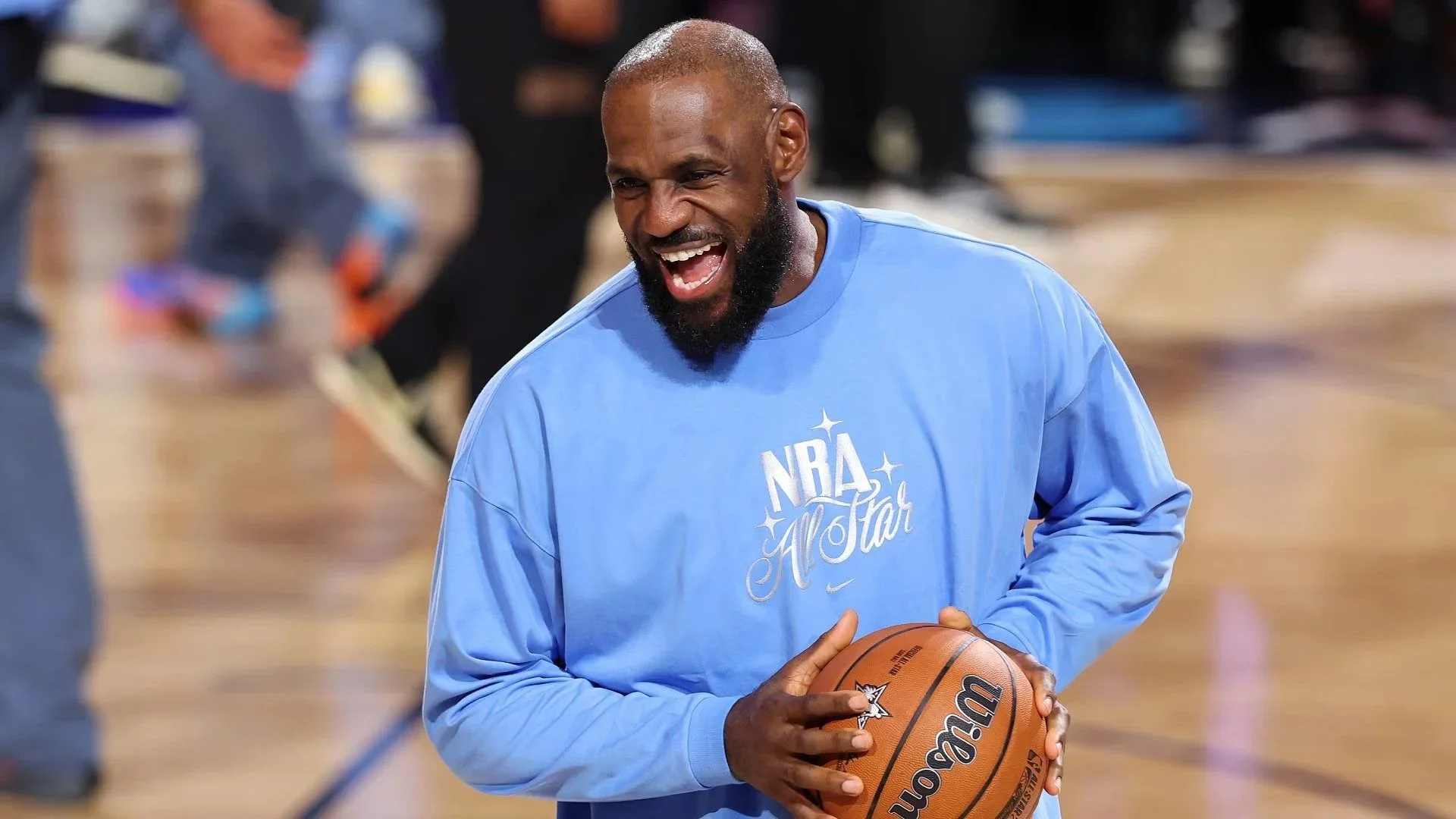
LeBron James is 41 years old. He has won four NBA championships, been named Finals MVP four times, earned more than $500 million in NBA salary, built a media company, produced films, and become one of the most commercially significant athletes in the history of sport. He has been watched, analyzed, debated, celebrated, and criticized by billions of people across two decades of professional basketball.
And then, after the Los Angeles Lakers' season ended this spring, he went quiet for a few weeks to ask himself a question that none of that had required him to answer before.
"I was pretty sure I played my last game. I knew I needed some time to really decide, but I was honest at that last press conference when I said I needed to look at myself and decide if I still love this game."
On July 24, LeBron James announced he was signing with the Philadelphia 76ers on a two-year, $8 million contract with a player option. He called it his last decision. The basketball implications are significant and have been covered extensively. What has received less attention is what the decision actually reveals, not about the 76ers' championship chances, but about what happens when an athlete at the end of a career creates the conditions to ask themselves what they are really playing for, and finds an honest answer.
The Question Most Athletes Never Ask
Athletic careers are structured in a way that defers the identity question almost indefinitely. There is always a next season, a next contract, a next challenge that provides external direction without requiring the athlete to examine what they are actually playing for. The schedule, the team, the competition, the commercial apparatus, the daily reality of being a professional athlete, all of it supplies so much definition from the outside that the question of what is driving the whole thing from the inside rarely becomes urgent until the structure suddenly disappears.
Most athletes never create the conditions for that examination voluntarily. Performance declines gradually, opportunities diminish, and the decision to stop is eventually made by external circumstances rather than internal clarity. The career ends reactively, shaped by what the market and the body will still support rather than by a genuine reckoning with what the career was for.
LeBron's situation after the Lakers season ended was structurally different. He had no contract. He had no obligation. He had every option available, from retirement to a maximum contract at a contending franchise to something in between. He was, for a few weeks, a 41-year-old man with no external definition of what came next, and the only place to find direction was inside rather than outside.
He said he had never experienced that before. "I've never been able to have no clue what to do and take real time to just think." The absence of external structure, which for most athletes arrives as a crisis, became for LeBron the conditions he needed to ask the question he had never had to ask in quite this form: what am I really playing for at this point?
What He Found
The answer LeBron gave when he announced his decision deserves more attention than it has received, because its specificity is unusual and its content is revealing.
He did not say he wanted to play basketball. He did not say he wanted to compete, or to win, or to chase one more championship. He said: "I'm not going for money. I'm not going for family. I still want to sacrifice. I still want to work. I still want to grind. I still want to compete, to win and to have a chance at the feeling of winning another championship."
That sentence is doing something specific. It is separating the process from the outcome, the daily reality of what elite sport demands from the result it eventually produces. An athlete who wants to win wants the trophy. An athlete who wants to sacrifice and grind wants the work itself, the discipline and the difficulty and the daily act of preparing to compete at the highest level. LeBron named both, in that order, with sacrifice and work coming before competition and winning.
What that sequence suggests is that what he found in the weeks of quiet examination was not primarily a desire for another ring, though that desire is real and explicitly stated. It is a continuing genuine love for what basketball demands of him, the part of the sport that exists independent of outcomes, that persists through losses and injuries and the physical difficulty of competing at 41, and that cannot be replaced by any of the other things his career has produced.
That distinction, between playing for what the sport gives you and playing for what the sport demands of you, is one that most athletes never articulate clearly even to themselves. LeBron articulated it publicly, in the announcement of the last significant decision of his playing career, after weeks of examination that produced something that has the quality of genuine discovery rather than constructed messaging.
The Jaylen Brown Trigger
The internal clarity LeBron found was necessary but not sufficient. It told him what he was playing for. It did not tell him where.
Rich Paul, LeBron's agent and CEO of Klutch Sports Group, confirmed this week on his podcast that Philadelphia was not in consideration until July 1, when the 76ers completed a blockbuster trade for Jaylen Brown from the Boston Celtics. Boston sent Brown, a two-time All-NBA guard who averaged career highs of 28.7 points, 6.9 rebounds, and 5.1 assists last season, to their Eastern Conference rivals in exchange for Paul George, two first-round draft picks, and two second-round picks.
"If you would have heard our conversations one day before the trade and then two days after the trade, those conversations couldn't have been further apart," Paul said. "There wasn't even radar on Philly in that case."
This detail is worth examining carefully because of what it reveals about how identity clarity and external conditions interact in a major career decision. LeBron knew what he was playing for before he knew where he was going. The answer to the internal question, that he wanted to sacrifice, grind, compete, and win, was already in place. What the Brown trade provided was an environment where that answer felt achievable, a roster with Embiid, Brown, and Tyrese Maxey that was genuinely constructed to contend for a championship rather than to make a competitive run that fell short of the real goal.
The 76ers went 45-37 last season and were swept by the eventual champion New York Knicks in the second round, including a 30-point loss in Game 4. Brown's arrival transformed the franchise's ceiling. LeBron's arrival, following directly from Brown's, is the confirmation that the ceiling is now being taken seriously by people outside the organization as well as inside it.
The internal work came first. The destination followed from it. That order matters, because it means the decision was grounded in something real rather than being shaped by whichever pitch arrived most persuasively or most expensively. The 76ers did not convince LeBron he wanted to play. They convinced him they had built something worth playing for, which is a different and more durable foundation for a final chapter.
What $8 Million Says
LeBron James signed for $8 million over two years. For a player who has earned more than $500 million in NBA salary alone, who remains one of the most commercially valuable athletes in the world, who could have commanded significantly more from multiple franchises, the $8 million is not a financial decision. It is a statement.
An athlete playing for money signs the largest contract available. An athlete playing for what LeBron described, for sacrifice and work and the chance to feel winning again, signs whatever gets him to the environment where that pursuit is possible. The contract is the clearest possible external expression of where he is in his relationship with his career and what he found when he asked himself the question that the weeks of quiet produced.
It also represents a specific kind of commitment. A player option after two years gives LeBron the ability to walk away if the body requires it or the pursuit no longer feels real. The structure of the deal is designed for honesty rather than security. It does not lock him into something he cannot sustain. It gives him the space to be what he said he wanted to be, fully committed to the work and the competition, for as long as that is genuinely true.
What This Reveals About Identity at the End of a Career
The conventional understanding of athletic career endings focuses on performance. Athletes stop when their bodies no longer support the level of play their career was built on, when the gap between what they can still do and what the game demands has become too large to bridge. That framework is real and it applies to almost everyone.
What it misses is the identity dimension of the decision, the question of what the athlete understood themselves to be across the career and what they become when that understanding is no longer available to them. Performance provides identity in sport more completely and more consistently than almost any other domain. The athlete knows who they are because what they do is clear, demanding, and publicly evaluated every time they compete. When that structure disappears, the identity question arrives in a form that the career never required them to answer directly.
Most athletes encounter this question for the first time after the career has already ended, when retirement is a fact rather than a decision and the examination happens in its absence rather than in its presence. The ones who navigate that transition most effectively are typically the ones who developed some sense of who they were beyond the sport while they were still in it, not as a replacement for the athletic identity but as something that could hold its shape when the athletic identity was no longer available.
LeBron did something different. He encountered the question while every option was still available, examined it with enough seriousness that he considered retirement as a genuine answer, and came out of the examination with a clarity that produced a specific and honest decision. He is not returning because the alternative was uncertain or because the market made it easy. He is returning because he found, when he looked at it honestly, that the game still demands something from him that he still wants to give.
That is a rare thing. It is rarer still at 41, with four championships, in what he is calling his last decision.
The Last Chapter
LeBron James will play his 24th NBA season in Philadelphia alongside Joel Embiid, Jaylen Brown, and Tyrese Maxey. He will be 41 years old when the season begins and 42 before it ends. The 76ers are built to contend, and whether they do will be determined by basketball, by health, by the specific outcomes of specific games in specific moments that nobody can predict with confidence.
What is already determined is something less visible and more durable than any of that. LeBron asked himself the hardest question available to an athlete at the end of a career and found a genuine answer. Not a comfortable one. Not the answer that maximized his earnings or minimized his risk or positioned his legacy most carefully. The answer that was true when he stripped away everything else and looked at what was still there.
He found that he still loves what the game demands of him. That he still wants to sacrifice for it. That the feeling of winning, not the trophy or the recognition or the commercial value of it, but the feeling, is still something he wants to compete for.
Philadelphia was not the plan. It became the answer because it was the environment where what he found in himself could be tested against something real.
That is what clarity does. It does not tell you where to go. It tells you what you are going for. The destination follows from that, and the decision, whatever it produces on the court next spring, was made on the right foundation.
Most athletes never ask the question LeBron asked this summer. Most of the ones who do, ask it too late to act on the answer. He asked it while he still had every option available, found something genuine, and made his last decision accordingly.
That is not a basketball story. That is an identity story that happened to be told by the greatest basketball player of his generation, at 41, on his way to Philadelphia.