The Generation That Became a Business Before Anyone Taught Them How
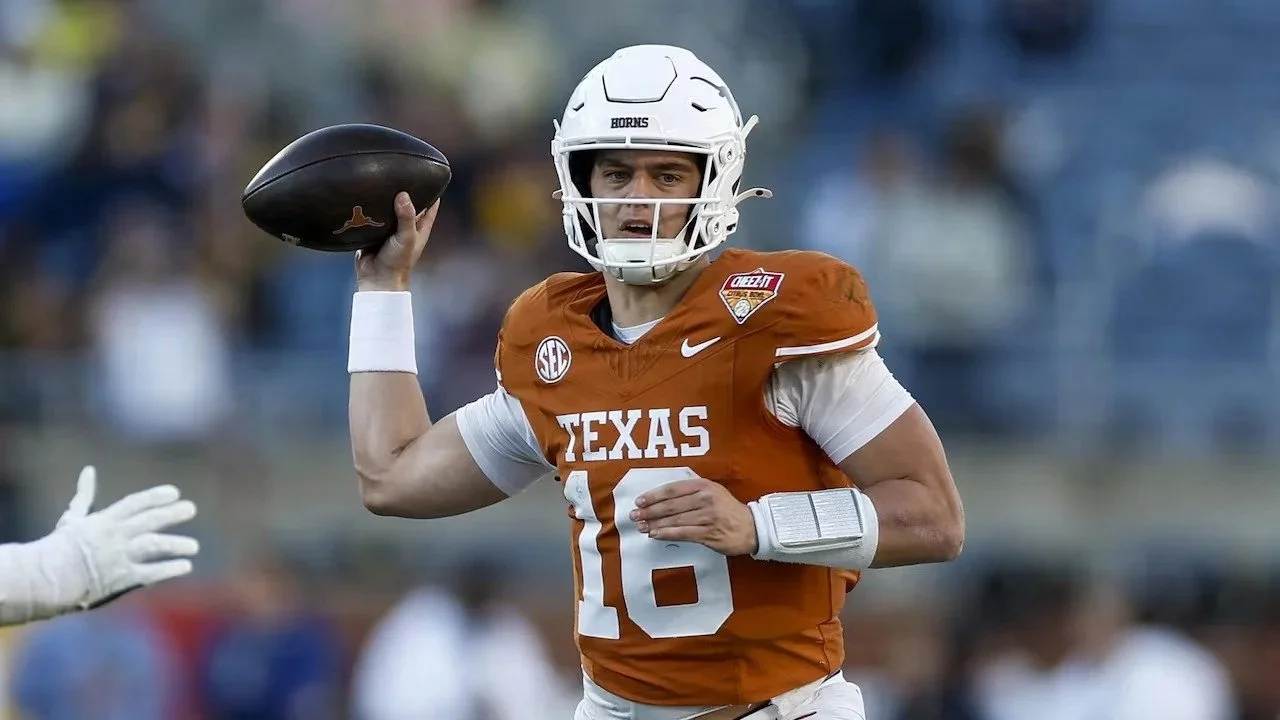
In March 2026, Arch Manning's NIL valuation sat at $5.4 million. He is still a college student. Each of the top 20 college athletes in the country carries a minimum valuation of $2 million. NIL transactions across the college landscape are projected to exceed $1.7 billion this year. Through the House v. NCAA settlement that came into effect this season, schools can now pay athletes directly, up to $20.5 million per institution, adding to whatever third-party NIL income those athletes are already earning.
These numbers are reported as a financial story. They are something more significant than that.
What the NIL era actually produced is a generation of college athletes who became commercial entities before they became professionals. Who have been managing brand relationships, negotiating contracts, making identity decisions with real financial consequences, and building public-facing presences since they were 18 or 19 years old. The money arrived years ahead of any framework designed to help them use it well. And the gap that created is not primarily about finances. It is about identity, and it is wider than almost anyone in college athletics has been willing to acknowledge.
What NIL Actually Changed
The standard conversation about NIL focuses on compensation, which is understandable and not wrong. For decades, college athletes generated enormous revenue for institutions that were prohibited from sharing it with the people generating it. The policy correction was overdue. The financial stakes are real and the athletes who have benefited from them have earned that benefit.
But the more consequential change is not financial. It is temporal. NIL compressed the timeline of identity formation for college athletes in a way that has no precedent in the history of sport.
Before NIL, an athlete's commercial identity, the public-facing sense of what they represent and what their name is worth, developed, if it developed at all, after the professional career began. The process was slow, often reactive, and shaped largely by whoever was advising the athlete at the time. The athlete was rarely the primary author of it.
NIL changed that entirely. A college freshman can now sign brand deals, build an audience, negotiate commercial relationships, and establish a commercial identity before they have played a single game that anyone paid to watch. The decisions being made at 18 and 19 years old about what to associate with, how to show up publicly, what to say yes to and what to leave alone, are identity decisions with compounding consequences. They shape how the athlete is understood, commercially and personally, for years beyond the moment they are made.
The money arrived before the frameworks did. And five years into the NIL era, the frameworks still have not caught up.
The Athlete as a Business Before Graduation
Arch Manning is the most visible NIL athlete in the country, but his situation is the least instructive for understanding what the era has actually produced. The infrastructure around him, the family name, the generational platform, the professional advisory apparatus, is exceptional by any measure. His NIL trajectory tells you something about the ceiling of the market. It tells you almost nothing about what the typical NIL athlete is navigating.
The more instructive cases are the thousands of college athletes earning meaningful income, five figures, sometimes six, sometimes more, who are managing brand relationships without strategic guidance, making content decisions without a clear sense of what they want to represent, and building commercial presence without a coherent thread connecting any of it. They are active, visible, and commercially engaged. They are also, in many cases, building something that looks like a brand without the identity foundation that would make it durable.
The NIL marketplace rewards visibility. Follower counts, engagement rates, platform reach, these are the metrics that drive deal flow at the college level. What the marketplace does not automatically reward is clarity, the specific, coherent sense of what an athlete represents that makes every commercial decision more legible and every opportunity easier to evaluate. An athlete with a million followers and no clear identity will attract deals. They will also attract deals that contradict each other, dilute their positioning, and leave them less clearly defined after two years of activity than they were before it started.
The difference between an athlete who uses the NIL period to build something genuinely durable and one who accumulates activity without direction is almost entirely determined by one thing: whether they developed a clear enough understanding of what they represent to make coherent decisions across all the domains they are now operating in simultaneously. Most have not been given the tools to do that. The system that created the opportunity did not build the infrastructure to help them use it well.
The Gap the Systems Around Them Have Not Closed
Universities responded to NIL with compliance offices, financial literacy programs, and NIL collectives designed to pool donor money and direct it toward athletes. These are useful responses to the transactional dimensions of the landscape. They address the deal, the contract, the compliance requirement. They do not address the identity question that sits underneath all of it.
A compliance office can tell an athlete whether a deal is permissible. It cannot tell them whether it is right for who they are and what they are trying to build. A financial literacy program can explain investment basics and tax obligations. It cannot explain why the commercial decisions made at 19 have consequences for how an athlete is understood at 25. An NIL collective can connect athletes with brand partners. It cannot replace the foundational work of understanding what the athlete represents clearly enough to know which partners make sense and which ones quietly dilute something that was never fully defined in the first place.
Employers have responded with something closer to confusion. The phenomenon of a traditional career structure encountering an athlete who has already been a business is real and increasingly common. The frameworks that exist for transitioning athletes into post-sport careers were built for a different era, one in which the commercial dimension of an athletic career was something that happened to a small number of elite professionals, not something that an entire generation of college athletes was navigating simultaneously. Those frameworks have not been updated to reflect what the NIL generation actually is.
Agents and advisors have responded by moving earlier into the recruiting process, signing athletes in high school, sometimes in middle school, in an attempt to capture relationships before the competition does. This solves the representation problem at the individual level without necessarily solving the identity problem. An athlete can have professional representation and still lack a clear sense of what they represent. The representation shapes the deals. The identity shapes whether those deals build something lasting.
Nobody in the ecosystem has yet built a systematic answer to the more fundamental question: how does a college athlete develop a clear enough understanding of what they represent to make good decisions across all of these domains simultaneously, commercial, athletic, personal, and professional, during a four-year window that moves faster than almost any other period in a person's life?
What the Transition Out Reveals
The end of the college career is where the identity gap becomes most visible, and where its consequences are hardest to reverse.
For athletes who go professional, the NIL identity built in college does not automatically transfer. The commercial context changes, the platform changes, the expectations change, and what worked as a college athlete with regional visibility and a specific institutional identity may not translate cleanly into a professional context with different demands and a different audience. The athletes who carry their identity forward most effectively are the ones who built something specific and coherent enough to survive the context change. The ones who built visibility without direction find that the platform does not travel the way they expected it to.
For athletes whose playing career ends at graduation, which is the overwhelming majority of college athletes regardless of sport, the gap is sharper still. They leave a context that gave them structure, identity, and commercial value simultaneously. The schedule, the team, the institution, the athletic identity, all of it disappears at once. What remains is whatever they built that exists independently of that structure. For athletes who developed a clear sense of what they represent beyond their sport, that foundation holds. For those who did not, the transition is significantly harder than the NIL income they earned during college would suggest it should be.
The money does not transfer automatically. The identity, if it was built clearly enough, does.
The Opportunity and the Gap
The NIL era created something genuinely new in sport. A generation of athletes who are commercial entities before they are professionals, identity builders before they have fully built their identity, business operators before the business education arrived. The opportunity embedded in that situation is real. The gap embedded in it is equally real, and it runs deeper than anyone in college athletics has yet fully reckoned with.
The athletes who capture the opportunity most fully will not be the ones with the highest valuations or the most deals. The Arch Manning comparison is a distraction from the more important story, which is not about exceptional cases but about what the generation as a whole is navigating and what they need to navigate it well.
The athletes who come out of the NIL era with something genuinely durable will be the ones who developed clarity about what they represent early enough to make every decision more coherent because of it. What to say yes to. What to leave alone. How to show up consistently enough that the commercial identity they built in college has a foundation that holds when the structure of the college environment is gone.
That clarity does not arrive automatically with visibility or income or even professional guidance. It has to be built deliberately, with enough intention and enough self-understanding to make it real rather than just legible on a brand deck. And it has to start earlier than the current ecosystem has made the norm, not at the end of the college career when the transition is already underway, but at the beginning, when the decisions that compound over four years are just starting to be made.
The NIL era gave college athletes something unprecedented. The infrastructure to help them use it well is still being built.