Why Adidas Made a Film Instead of an Add
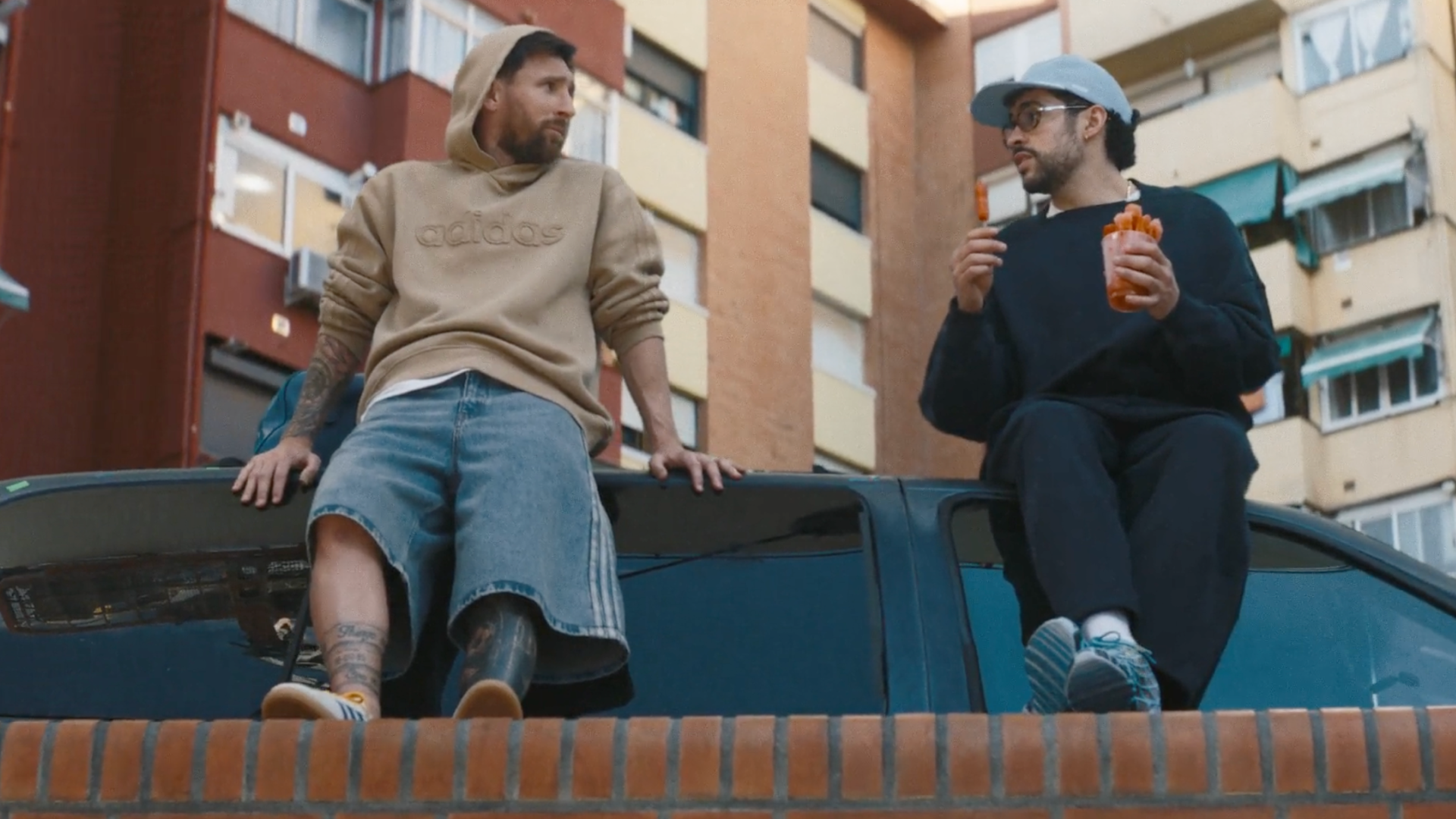
On May 6, 2026, Adidas released Backyard Legends, its primary campaign ahead of the FIFA World Cup 2026. It is five minutes long. It features Timothée Chalamet, Lionel Messi, Bad Bunny, David Beckham, Zinedine Zidane, Lamine Yamal, Jude Bellingham, Trinity Rodman, and a cast of current stars alongside three completely unknown young players named Isaak, Ruthie, and Clive. It is shot under streetlights on city courts and backyard pitches rather than in stadiums. It plays like a heist movie trailer. And it is one of the most deliberate pieces of identity communication sport has produced in years.
It is also not an advertisement. Understanding the difference between what Adidas made and what most brands make is the most useful entry point into what Backyard Legends actually reveals about how identity works in sport.
What Adidas Actually Made
An advertisement tells you what a brand wants you to think about itself. It states a position, illustrates it with imagery, and repeats it often enough that the association forms. This is a legitimate and often effective approach. It is also, at its core, a declaration made by the brand about the brand. The audience is the recipient of a message, not the participant in a story.
Backyard Legends operates on an entirely different logic. Nothing in the film states what Adidas stands for. Nothing explains the brand's values or articulates a positioning statement. What the film does instead is show, through specific and deliberate choices about story, character, setting, and tone, what Adidas actually believes about football and about the world.
Street courts over stadiums. That choice says: greatness does not begin in professional environments. It begins where anyone can play, where the only requirement is showing up and wanting it badly enough.
Unknown players given equal weight to all-time legends. That choice says: the hierarchy of football is not fixed. Isaak, Ruthie, and Clive are not background characters in a film about Messi and Zidane. They are the protagonists. The legends are the supporting cast.
Generations colliding rather than existing in separate eras. Beckham next to Bellingham. Zidane watching players young enough to be his grandchildren. Del Piero and Messi as witnesses rather than stars. That choice says: football is not a sequence of eras. It is a continuous conversation across time, and the people carrying it forward now are connected to everyone who carried it before them.
Timothée Chalamet narrating as someone who grew up dreaming about these players, doing his own versions of Beckham's free kicks and Zidane's volleys at Pier 40 in New York. That choice says: football belongs to everyone who fell in love with it, not just to those who played it professionally.
None of these statements appear in any copy line. All of them are communicated through the story. That is the specific power of film as a positioning tool, and it is why the campaign generated immediate cultural conversation rather than marketing conversation. The world did not talk about what Adidas said. It talked about what Adidas made.
Why Film Carries What Advertising Cannot
The shift from campaign to film is not a creative trend. It reflects something real about how identity is communicated most powerfully, and why the most credible positioning statements in sport increasingly take narrative form.
An advertisement can be engineered. A tagline can be written by anyone with enough craft and enough distance from the truth of what they are representing. The gap between what a brand claims and what it actually is can be papered over with good copywriting and expensive production. Audiences know this, and they account for it. The implicit discount applied to brand communication is significant, because everyone understands that a brand is making claims about itself in its own interest.
A film is harder to fake. Not impossible, but harder. Sustaining a five minute narrative built on something that is not genuinely believed, through specific casting choices, specific setting choices, specific story choices, requires a level of coherence that hollow positioning cannot produce. The details accumulate. The choices reveal. The story either feels true or it does not, and audiences feel the difference even when they cannot articulate it.
What Backyard Legends communicates about Adidas, that the brand genuinely believes football belongs to the streets as much as the stadiums, that the next generation of legends is already out there playing under city lights, that greatness is not manufactured by institutions but discovered in the spaces between them, feels true in a way that a 30-second spot making the same claims would not. The length earns the credibility. The specificity earns the credibility. The willingness to make unknown young players the protagonists of a film that could have been entirely about Messi and Zidane earns the credibility.
That credibility is what storytelling does that advertising cannot. It makes identity feel real rather than constructed. And in sport, where authenticity is the most valuable and most fragile asset any organization or individual can possess, the difference between real and constructed is everything.
The Generational Layering as Narrative Strategy
The casting of Backyard Legends deserves more attention than it has received as a positioning decision rather than a star power decision.
The obvious read is that Adidas assembled the most recognizable names in football and entertainment and built a film around them. That read is not wrong, but it misses the more important strategic layer. Every casting choice makes a specific argument about what football means and who it belongs to.
Zidane and Del Piero are not in this film because they are famous. They are in this film because their presence next to Yamal and Bellingham communicates something about continuity that no copy line could achieve. The argument is not stated. It is felt. When Zidane watches a young player on a backyard court and something passes between them, the audience does not need to be told that football carries meaning across generations. They experience it.
Messi watching Isaak, Ruthie, and Clive, three players nobody has heard of, and treating them as worthy of attention, makes the central argument of the campaign more powerfully than any tagline could. Adidas is not saying that unknown players can become legends. They are showing Messi behaving as though that is already true. The implication is more powerful than the statement would be.
Bad Bunny and Chalamet are the most interesting casting choices of all, because they are not footballers. Their presence says something about the boundary of the sport, about where football ends and culture begins, and whether that boundary is even real. Chalamet's line, "What do I know about soccer? Nothing. I know about football, Benito. Football," is the film's most quoted moment precisely because it captures something true about how football is experienced by people who love it without having played it at any serious level. The word matters. Soccer is a sport. Football is something you grew up with. The distinction is not linguistic. It is identity.
What This Means Beyond One Campaign
Backyard Legends is a Adidas campaign, which means its primary purpose is commercial. But the approach it represents has implications that extend well beyond advertising strategy.
The organizations, athletes, and brands building the most durable narratives in sport right now are increasingly the ones that understand storytelling as infrastructure rather than decoration. Not storytelling as a marketing layer applied on top of an existing identity, but storytelling as the primary means through which identity is built, communicated, and made legible to the world.
The reason this distinction matters is the same reason film carries what advertising cannot. Identity communicated through story, through specific characters, real tensions, honest moments, and emotional arcs that unfold over time, is identity that the audience participates in rather than receives. They bring their own experience to it. They recognize something in it. They carry it forward in a way that a tagline does not travel.
Sport has always understood this at the level of the game itself. The reason people return to sport is not the product. It is the narrative, the seasons that build, the careers that arc, the moments that arrive with the weight of everything that came before them. The game is the story. What the strongest brands, clubs, and athletes in sport are learning is that the story does not have to begin and end on the pitch or court. It can be extended, deepened, and made more legible through the deliberate choices made about how to tell it.
The athletes and organizations who understand this earliest are not just better at marketing. They are better at building something that lasts beyond any single season, campaign, or result. Because they have built their identity into a form that travels, that accumulates meaning over time, and that becomes more rather than less true the longer it exists.
Adidas did not make Backyard Legends because they needed an ad for the World Cup. They made it because they understood that the most powerful statement they could make about what they stand for was not a statement at all.
It was a story.
What Backyard Legends Actually Proves
The campaign will be remembered, if it is remembered, not because of the names in it but because of what it understood about how identity works. That the most credible thing any brand, athlete, or organization can do is not tell the world what they represent. It is make something true enough, specific enough, and honest enough that the world recognizes it without being told.
Zidane watching a kid play street football under city lights. Messi giving Isaak, Ruthie, and Clive the weight of his attention. Chalamet saying football, not soccer, with the quiet certainty of someone who grew up loving a game that shaped him before he was famous enough for anyone to care.
These are not advertising choices. They are identity choices. And the difference between those two things is the distance between a campaign that runs for a month and a story that stays with you.