After the Buzzer: What March Madness Doesn't Prepare Athletes For
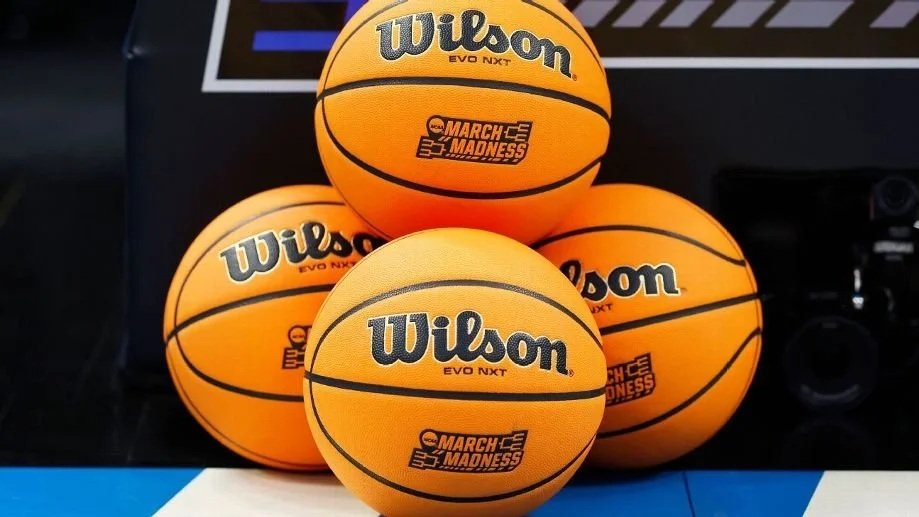
For a few weeks every spring, college basketball produces something that almost no other sporting event can replicate. Genuine, unpredictable, emotionally raw visibility at scale. Bracket picks argued over in offices and group chats. Names of players nobody had heard of in November being spoken by broadcasters to audiences of millions. Moments that live beyond the game itself, a block, a buzzer beater, a coach in tears, circulating for days after the final whistle.
Then, almost without warning, it stops.
The tournament ends. The cameras move on. The season that structured everything, practices, travel, games, team meetings, the daily rhythm that organized life for eight or nine months, disappears. And the athletes who just competed on the biggest stage of their careers are left with a silence that arrives faster than most people outside of sport ever realize.
That silence is where the real question lives. Not who won, but what comes next, and more importantly, who are you now that the structure holding your identity together is gone.
The winners' question
UCLA's women won their first NCAA championship on Sunday, beating South Carolina 79-51 in a performance that was dominant from the opening tip. Gabriela Jaquez, a Southern California native who dreamed of playing at UCLA and spent her entire college career there, finished with 21 points, 10 rebounds and five assists. Lauren Betts was named Most Outstanding Player. All five starters scored in double figures. A senior-heavy team that chose to stay, build something together, and finish it on the largest stage the sport offers got exactly the ending they came for.
That kind of identity clarity is rarer than it looks. Jaquez knew what she represented and why. She said after the game that her dream was always UCLA, that it meant everything to represent the community she grew up in, that the goal from the beginning was to do something the program had never done in the NCAA era. That is not a post-game quote manufactured for the cameras. It is a athlete who understood her own story and lived it to its conclusion.
But even for her, even for the players who got the trophy and the confoster and the moment they spent years building toward, the structure that held all of it together is now gone. The team disperses. The season does not continue. The identity that was built inside the container of a college program, with its schedule and its teammates and its shared purpose, has to find a new shape.
For the athletes who won, that transition comes wrapped in celebration, which makes it easier to navigate, at least initially. The harder version belongs to everyone else.
The losers' question
South Carolina's seniors have been to four title games in five years. They have played in the sport's biggest moments repeatedly, under one of the most respected coaches in the history of women's basketball. They leave without a trophy, again. UConn's players, who had won 54 consecutive games before South Carolina ended that streak in the Final Four, walked away from a run that will be remembered as one of the great stretches in college basketball history, without a championship to show for this particular season.
These are not athletes who failed. They are athletes who competed at the highest level of their sport and came up short in the final moments of a tournament that offers no consolation for second place.
And now they face the sharpest version of the question. What do you do with a narrative that does not have the ending you wanted? What does your college career mean when the result that would have defined it did not arrive? Who are you when the moment you spent years preparing for is behind you, and the outcome did not go your way?
Most athletes never develop a clear answer to these questions, not because they lack the depth or the character to answer them, but because nobody in their career helped them build an identity that existed independently of results in the first place. The sport provided the structure. The team provided the identity. The season provided the direction. When all three disappear at the same time, what remains is often less defined than anyone expected.
That gap, between the scale of the experience and the clarity of what comes after it, is where opportunity either gets built or quietly lost.
The transfer portal as a signal
Michigan won the men's championship Monday night, beating UConn 69-63 for the program's first title since 1989. It was a roster largely assembled through the transfer portal, athletes who made deliberate decisions to move programs, chase a better situation, put themselves in position to compete for something meaningful.
That is worth examining carefully, because it represents something genuinely new in college sport. Athletes are increasingly treating their careers as something to be directed rather than simply experienced. Choosing a program is no longer just about where you get recruited. It is a strategic decision about platform, development, visibility, and opportunity. The transfer portal made that explicit in a way that was previously difficult or socially discouraged.
That is a form of identity management, even when it is not framed that way. An athlete who looks at their situation and says, this is not the right environment for what I am trying to build, and moves accordingly, is doing something strategically significant. They are treating their career as an asset to be positioned, not just a path to be followed.
But there is an important distinction between moving strategically and understanding clearly what you represent. One is about finding the right situation. The other is about knowing what you are bringing to it. The athletes who navigate these decisions best are the ones who have both, a clear sense of their own identity and the strategic awareness to place it where it can grow. When only one exists without the other, the moves get made but the clarity never quite arrives.
What the tournament reveals
March Madness is unusual because it compresses everything that college sport involves into a short, intense, publicly visible window. The pressure is real. The stakes are real. The visibility is real. And the transition that follows, from the peak of the season to the silence of its absence, happens faster and more completely than in almost any other sporting context.
What the tournament consistently reveals, if you watch closely enough, is the gap between an athlete's public moment and their private sense of direction. The ones who perform best under pressure are not always the ones who navigate what comes after best. The ones who handle the transition most effectively, who build something lasting from the visibility and the experience, are more often the ones who had a clearer sense of what the career meant beyond the results.
Jaquez knew what her story was. That clarity did not make her a better shooter. But it shaped how she carried herself, how she spoke about what the moment meant, and how she will move forward from it with something more than a trophy. The athletes who struggled to find that clarity, winners and losers alike, will find the transition harder, not because they are less talented or less dedicated, but because the identity they built was more tightly bound to the structure of the season than they realized.
That structure just ended. For everyone.
The morning after
The tournament is a transition point, not a conclusion. For most college athletes, the identity work has barely started by the time the Final Four arrives. The career built inside a program, shaped by a coach, defined by a team, produces real qualities: discipline, resilience, the ability to perform under pressure, a sense of shared purpose. Those things are genuinely valuable. But they do not automatically translate into direction once the season ends.
The visibility March Madness generates is real. The attention is real. For a brief window, some of these athletes have more people watching them than they will ever have watching again. What gets built from that depends almost entirely on whether they understand what they represent clearly enough to direct it, and whether anyone around them is helping them think about it in those terms.
Most are not getting that help. Not because the people around them do not care, but because the system that produced them was designed to win games, not to build athletes who understand their own position.
The buzzer is the easy part. The morning after is where the work begins, and where most athletes find themselves without a clear map for what comes next.
That map does not have to be built in hindsight.