Two Weights, One Match
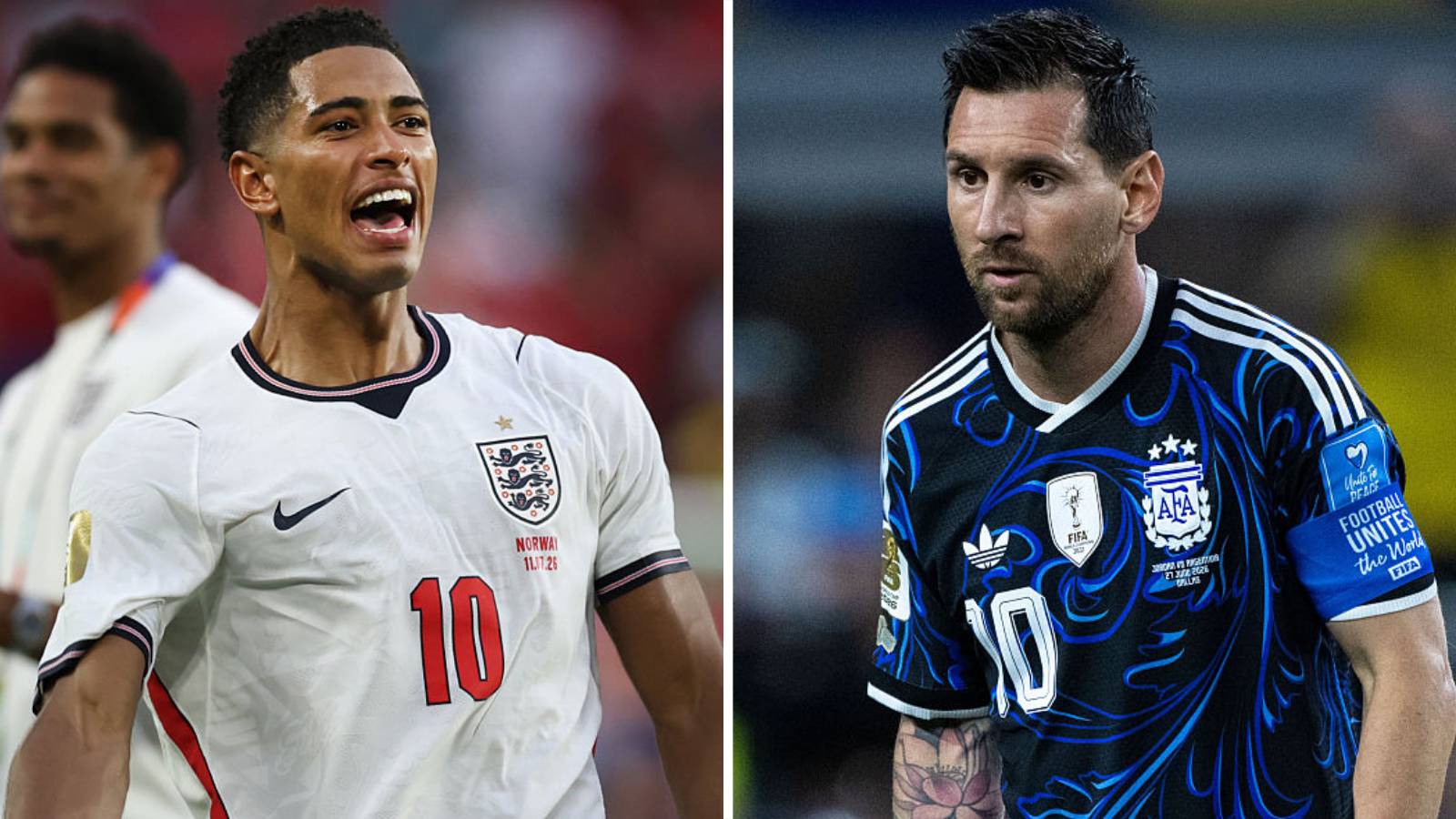
Tonight in Atlanta, England play Argentina in the World Cup semifinal. First meeting at a World Cup since 2002. The last time they met, Jude Bellingham had not been born yet. Lionel Messi has never played England in a competitive match. Tonight is the first time.
The match is carrying two distinct weights into the stadium simultaneously. The first has been accumulating for sixty years. The second was created in the last six weeks. They are entirely different in character, entirely different in origin, and understanding the difference between them is the most useful way to understand what is actually happening in Atlanta tonight, and what it reveals about how trust works in sport.
The Narrative Nobody Built
The England Argentina rivalry is one of the clearest examples in world sport of a narrative that accumulated without anyone deciding it should. There was no strategic planning behind it. No brand consultant identified the opportunity. No governing body manufactured the tension. It grew from real events, real politics, real human moments that people lived through and passed forward across generations who were not there to experience them firsthand.
In 1966, Argentina captain Antonio Rattín was controversially sent off in a World Cup quarterfinal at Wembley and refused to leave the pitch. He sat on the red carpet reserved for the Queen. England manager Alf Ramsey refused to let his players swap jerseys with the Argentines and later called them "animals." That ejection directly led to the invention of red and yellow cards for the 1970 World Cup.
In 1982, Argentina invaded the Falkland Islands, or the Islas Malvinas, a group of islands off the coast of Argentina under British control. England won the war in two months. 649 Argentine soldiers died. The islands are still British today. Argentina still disputes the matter. Argentine foreign affairs minister Pablo Quirno said this week that people in the Falklands have been "artificially implanted by the occupying power." A spokesperson for British Prime Minister Keir Starmer responded that the islanders are British with a right to determine their own future.
In 1986, Diego Maradona scored two goals in a World Cup quarterfinal in Mexico City that are still discussed every single day somewhere in the world. The first he scored with his hand and described afterward as "a little with the head of Maradona, and a little with the hand of God." Years later, he fully admitted the handball and called it "symbolic revenge for the Falklands." The second goal he scored by running half the length of the pitch past five England outfield players and the goalkeeper in what is still widely considered the greatest goal in the history of football. Both goals exist in permanent tension, the most beautiful and the most controversial, scored in the same match by the same man in the same ten minutes.
In 1998, David Beckham was sent off against Argentina and became a national villain in England for years. In 2002, he scored the penalty that contributed to Argentina going out in the group stage and became, for many, a national hero.
FIFA bans English and Argentine referees from officiating any match involving the other nation. A governing body had to write a rule to manage what these two countries do to each other when a football is involved.
An Argentine veterans association issued a statement this week asking fans to please focus on football and not sovereignty claims. The fact that the statement was necessary says everything about how alive this history remains.
None of this required management, amplification, or strategic communication to become what it is. It required only time and the accumulation of real, specific, contested moments that people could not forget. The Argentine supporters' songs reference the Falklands. The chants have been the same for decades. You cannot explain why this match matters to someone who does not already feel it, because it is not the kind of thing that explanation produces. It is the kind of thing that history produces, slowly, irreversibly, across events that were never primarily about football.
That is what genuine narrative looks like after sixty years. It does not need to be protected or maintained. It runs regardless of what anyone officially says about it.
The Legitimacy Crisis FIFA Built
The second weight tonight's match is carrying is entirely different in origin and character. FIFA did not inherit a legitimacy problem at this World Cup. It created one, through a specific series of decisions and behaviors over the last six weeks that made it progressively more difficult to defend the institution's neutrality at exactly the moment when defending it mattered most.
It began with Gianni Infantino, the FIFA president, being caught on video telling Argentine media that he had "suffered with" Argentina during their tense match against Cape Verde. He subsequently backtracked and insisted he remained neutral. The video had already been shared millions of times.
Egypt filed a formal complaint with FIFA after their round of sixteen exit to Argentina, citing double standards in officiating. The Egyptians had led 2-0 before Argentina scored three late goals to advance. Egyptian federation officials challenged a VAR decision that ruled out a goal and pointed to a foul on Mohamed Salah in the buildup to Argentina's stoppage-time winner that VAR did not review. Egypt's coach, Hossam Hassan, said his team had been cheated and that Argentina had benefited from "support at every level." Egypt's forward Mostafa Ziko suggested the World Cup was "directed towards Argentina."
Switzerland's manager, Murat Yakin, said after his team's quarterfinal defeat to Argentina that they had been "not just playing against Argentina, but 70,000 fans, the referee, and VAR as well."
Fan-compiled videos purporting to show a pattern of refereeing decisions favoring Argentina circulated widely on social media. FIFA ordered them removed on copyright-infringement grounds. The takedowns generated more suspicion than the videos themselves had.
FIFA appointed an all-Argentine officiating team for the quarterfinal between France and Morocco, two of the tournament's strongest remaining sides. The decision generated immediate and widespread backlash. The match passed without major controversy, which some observers noted only because the controversy around the appointment had primed everyone to look for it.
The CONMEBOL president, the South American football confederation's governing official, was photographed sitting impassively when Paraguay scored in a match but visibly celebrating when Argentina completed a comeback against Egypt. His body language was captured and shared.
FIFA's refereeing chief, Pierluigi Collina, addressed none of these specific incidents directly. He issued a general warning against "unfounded allegations," said nobody could question the integrity of FIFA World Cup match officials, and noted that threats against referees and their families were not right. He was not wrong. He also did not answer what was actually being asked.
None of the documented behaviors described above constitutes proof of systematic corruption or deliberate match-fixing. The academic research on refereeing bias suggests that officials, unconsciously and without improper instruction, tend to make more favorable decisions toward stronger, more famous, more commercially significant teams in high-stakes situations. That structural tendency is more prosaic than a conspiracy and more difficult to fix than a scandal, because it requires no bad intent to operate.
But the question of whether corruption actually occurred is, at this point, almost beside the point. What FIFA has produced through its own conduct is a legitimacy crisis so complete that the institution cannot credibly address it. When the president of the governing body is caught on video expressing preference for one nation, when copyright law is used to suppress fan scrutiny rather than address its substance, when formal complaints from national federations produce warnings about unfounded allegations rather than engagement with the specific claims, the institution has forfeited its ability to be a credible defender of its own integrity. It has made it impossible to watch Argentina play without a question running underneath the experience, and it produced that impossibility entirely through its own choices.
What Happens When the Frame Cannot Be Trusted
The practical consequence of FIFA's legitimacy crisis is specific and uncomfortable to articulate but important to name clearly. It does not make the football dishonest. It makes the environment in which the football is played impossible to fully trust, and that is a different and in some ways more insidious problem.
When a referee makes a contentious decision in a match involving Argentina tonight, every observer will bring two sets of questions to it. The first set is the normal set: was that the right call, did the referee see it clearly, would VAR intervene. The second set is the one FIFA created: is this part of the pattern, is this one of the decisions that goes a specific way for a specific reason, is what I am watching what I think I am watching.
The second set of questions does not require a conspiracy to exist. It requires only an institution that has behaved in ways that made the questions reasonable. FIFA did that. Nobody else did it for them.
The Egyptian coach who accused his opponents of benefiting from "support at every level" may have been wrong about the specifics. But he was not wrong to feel what he felt, because FIFA's conduct throughout this tournament has made it rational to suspect what he suspected. That is the damage that institutional self-inflicted wounds produce. Not necessarily a false result, but an environment in which any result can be questioned, and the institution supposed to answer the question has already shown it cannot be trusted to answer it honestly.
The Difference Between the Two Weights
Earned narrative and institutional legitimacy are both forms of trust, but they accumulate and decay through entirely different mechanisms, and tonight's match illustrates the difference more clearly than almost any sporting event in recent memory.
The England Argentina narrative is six decades old and gets stronger with every meeting because every meeting adds to something that is genuinely, specifically, historically real. It was produced by events that preceded modern FIFA, that have nothing to do with refereeing appointments or VAR technology or copyright takedowns. It belongs to the nations, the players, the fans, and the history that produced it. It cannot be manufactured by an institution, and it cannot be destroyed by one either.
Institutional legitimacy works in the opposite direction. It is not accumulated through specific moments and stories that people feel. It is maintained through consistent behavior over time, through being visibly, consistently, and credibly the thing you claim to be. It requires no particular drama to build. It requires only reliable conduct across enough time that people stop questioning whether it is real. And it can be destroyed surprisingly quickly by a specific pattern of behavior that reveals the gap between the claimed identity and the actual one.
FIFA has been eroding its own legitimacy for decades through corruption scandals, governance failures, and decisions about tournament hosting that prioritized commercial and political considerations over the stated principles of the organization. What the 2026 World Cup has done is make that erosion visible in real time, during the tournament itself, in front of the largest global audience the sport ever reaches. Infantino saying he suffers with Argentina on video is not a minor gaffe. It is the most public possible confirmation of what the accumulated evidence of years has suggested.
The rivalry between England and Argentina does not need FIFA to be legitimate in order to be real. It was real before FIFA in its modern form existed, and it will be real after whatever version of the organization exists in thirty years. The match tonight carries sixty years of history that nobody manufactured and nobody can take away.
What FIFA has done is add a question to the frame around that history that it could have avoided entirely and chose not to. The question will sit alongside every moment of tonight's match, not because it is fair, not because it is answered, but because it was made rational by the institution that was supposed to make it impossible.
What Tonight Will Prove
The match will be remembered for what happens on the pitch. It will be remembered for what Messi does in his first competitive encounter with England, for what England do with sixty years of unresolved football history, for what the result means to two nations whose relationship extends so far beyond sport that a veterans association had to issue a statement asking fans to keep things in perspective.
It will not be remembered primarily for Infantino's press conference behavior or Egypt's formal complaint or the copyright takedowns or the all-Argentine officiating appointment for a quarterfinal. Those will be remembered separately, as the story of an institution that had the world's most powerful sporting product and worked steadily to make itself unworthy of it.
The match survives what FIFA has done. Sixty years of real, specific, contested, living history is not vulnerable to six weeks of institutional self-sabotage. The rivalry between England and Argentina is too old, too genuine, and too deeply embedded in things that have nothing to do with sport to be diminished by anything a governing body does in the margins around it.
Whether FIFA survives what FIFA has done is a different question, and a more open one than the result tonight will resolve.